
 Free Delivery & Return
 365-Day Returns
 10 Million Happy Customers
 500,000 Products in Stock


Storage


Storage
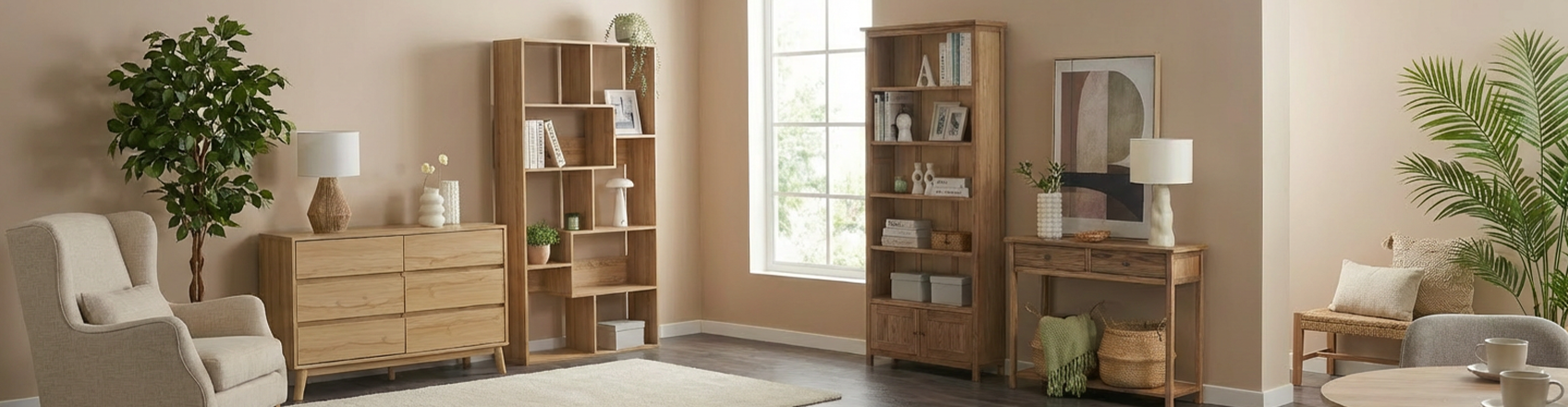
Storage furniture has to do two jobs at once: keep everyday clutter under control and still look like it belongs in the room. What works changes from one room to the next, since a hallway needs quick access to coats and shoes while a dining room needs a piece that can be shown off. This guide goes room by room so you can match the piece to the job.
What storage furniture does each room need?
Each room asks something different of its storage: a living room needs it to handle electronics and display pieces at once, while a bathroom needs it to cope with humidity. The cards below cover the main piece for each room, with what to check before buying it.
Living room
TV stand and sideboard
Size the TV stand to the screen, not the room, and use a sideboard for bulkier items — it needs more floor space, so it suits larger rooms best.
Bedroom
Wardrobe and chest of drawers
A wardrobe with adjustable compartments or sliding doors makes better use of a tight footprint. A chest of drawers adds storage without taking up much floor space.
Bathroom
Wall-mounted cabinet
Wall-mounted frees up floor space in a small bathroom; a mirrored cabinet adds a reflective surface that helps the room feel brighter.
Kitchen
Trolley and display cabinet
A trolley adds mobile storage and worktop space in a smaller kitchen. A glass-front cabinet suits dishes or cookbooks you want to see at a glance.
Home office
Lockable cabinet and bookcase
Choose a lockable cabinet if you keep anything sensitive at your desk. A bookcase holds reference material and adds character to the room.
Hallway
Shoe cabinet and coat stand
A shoe cabinet keeps footwear off the floor where surface space is limited. Pair with a coat stand for jackets and bags on the way out.
Which pieces work well in a living room?
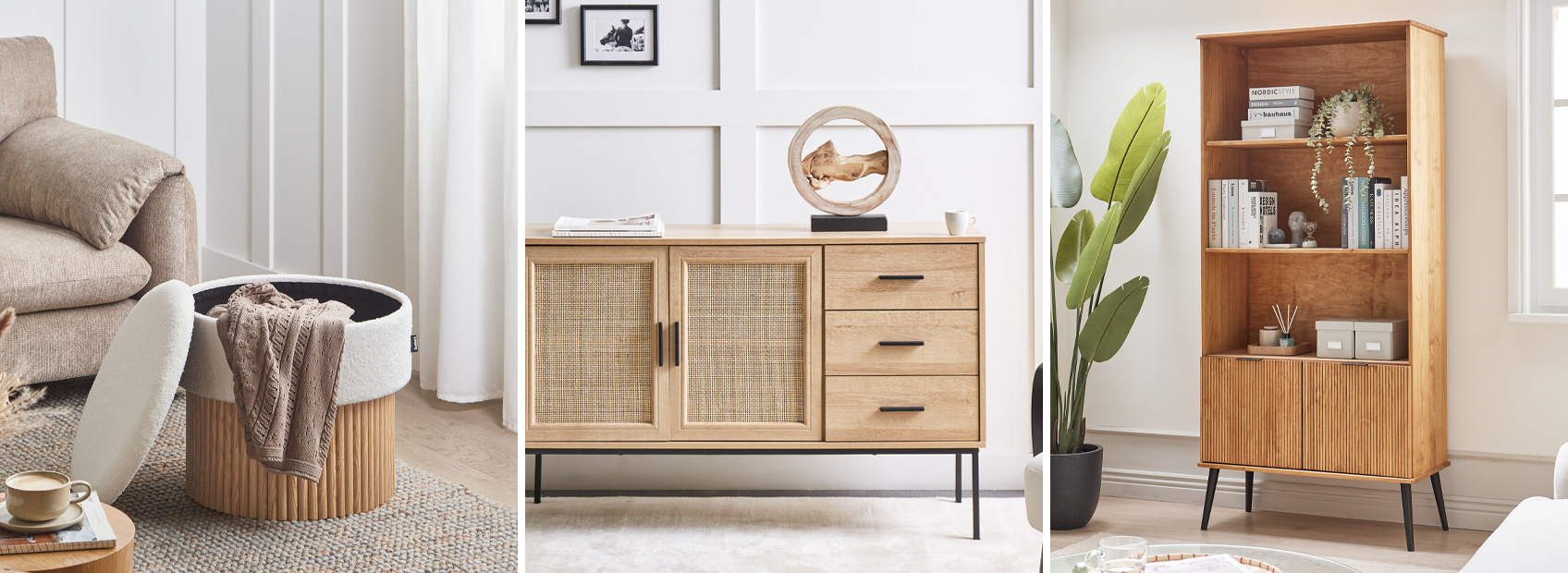
A TV stand keeps remotes, consoles and cables together and works best chosen to match your screen width rather than the room size, so it doesn't dominate a small wall. Sideboards and chests of drawers hold bulkier items such as tableware, board games or linens and double as display surfaces, but need more floor space, so they suit larger rooms better than compact ones.
A storage ottoman is a flexible option: it works as extra seating or a footrest, opens up for blankets or books, and doubles as a coffee table, though its storage capacity is limited compared with a dedicated cabinet. Open shelving makes use of vertical wall space for books, plants or décor, but is easiest to keep looking tidy when only part of it is filled, leaving room to breathe between items.
Getting TV stand height right
For comfortable viewing from a standard sofa, the centre of the screen should sit at roughly seated eye level — around 105 to 115cm from the floor. Measure your sofa's seat height and the TV's own height first, then pick a stand that lands the screen centre in that range rather than choosing on width alone.
Shop now: TV stands and sideboards
What storage works best in a dining room?
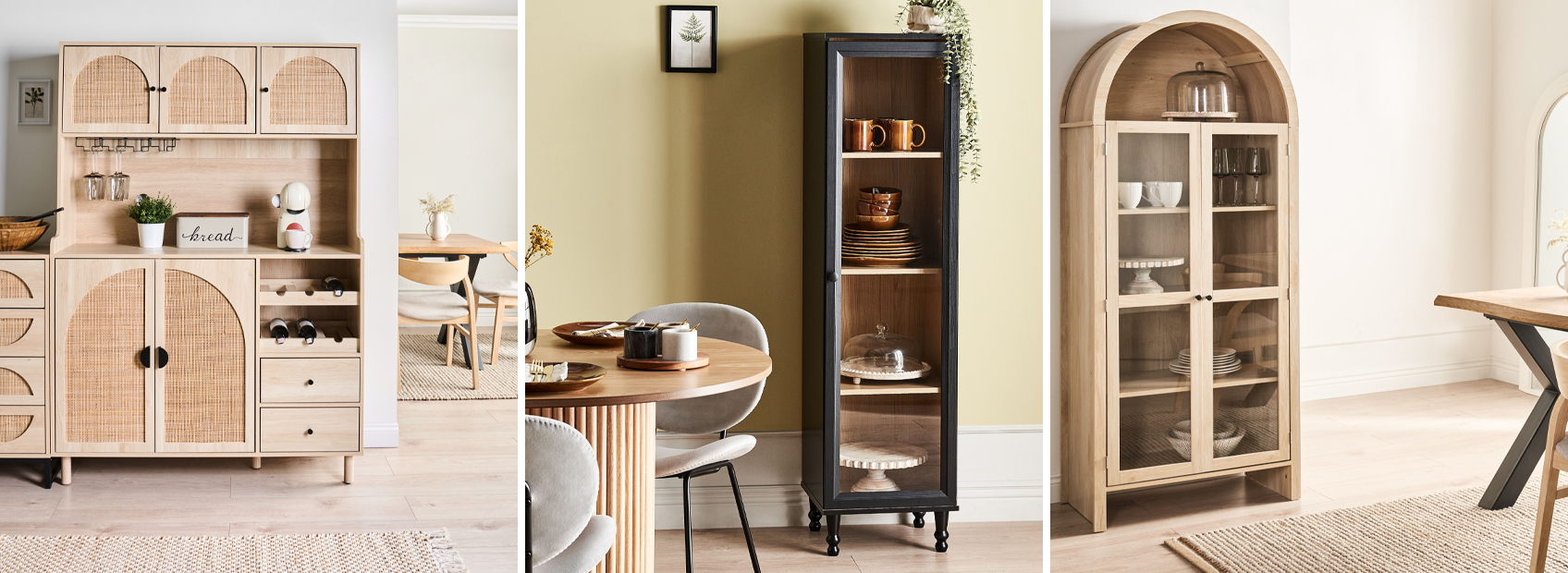
A display cabinet is the natural choice for dinnerware, glassware or collectables you want visible; glass doors keep contents on show while still keeping dust off, though a fully glazed cabinet does need more regular cleaning than a solid one. In smaller dining rooms, wall-mounted shelving adds display or overflow storage without taking up floor space, so it's worth considering before a full cabinet if space is tight.
Shop now: display cabinets
How should you organise bedroom storage?
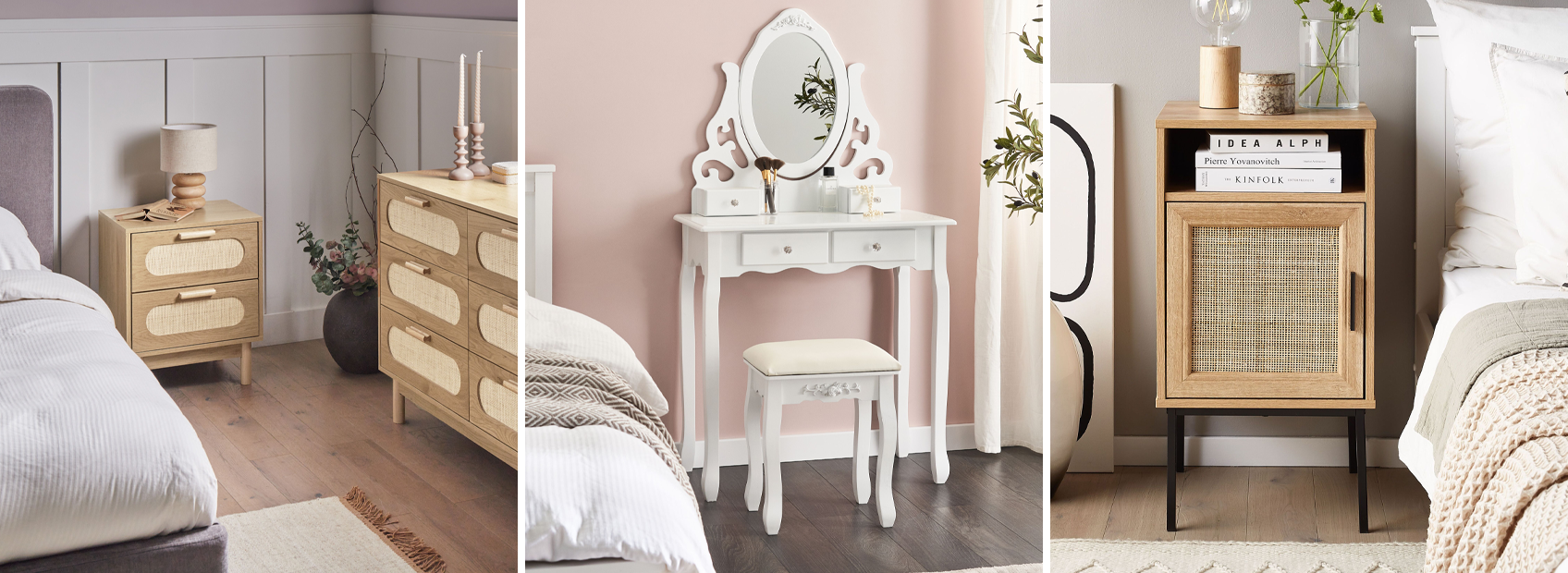
A wardrobe is usually the anchor piece; one with adjustable internal compartments or sliding doors makes better use of a tight footprint than a fixed-shelf version. Bedside tables keep essentials like a lamp, book or charger within reach, and a version with a drawer or shelf adds useful extra storage, though a deep bedside table can feel oversized in a small bedroom.
A chest of drawers suits clothing, linens or personal items and takes up comparatively little floor space for the storage it offers. A dressing table with an integrated mirror and drawers keeps cosmetics, jewellery and grooming items organised in one place rather than spread across other surfaces.
Shop now: bedside tables and dressing tables
What's the best way to store bathroom items?
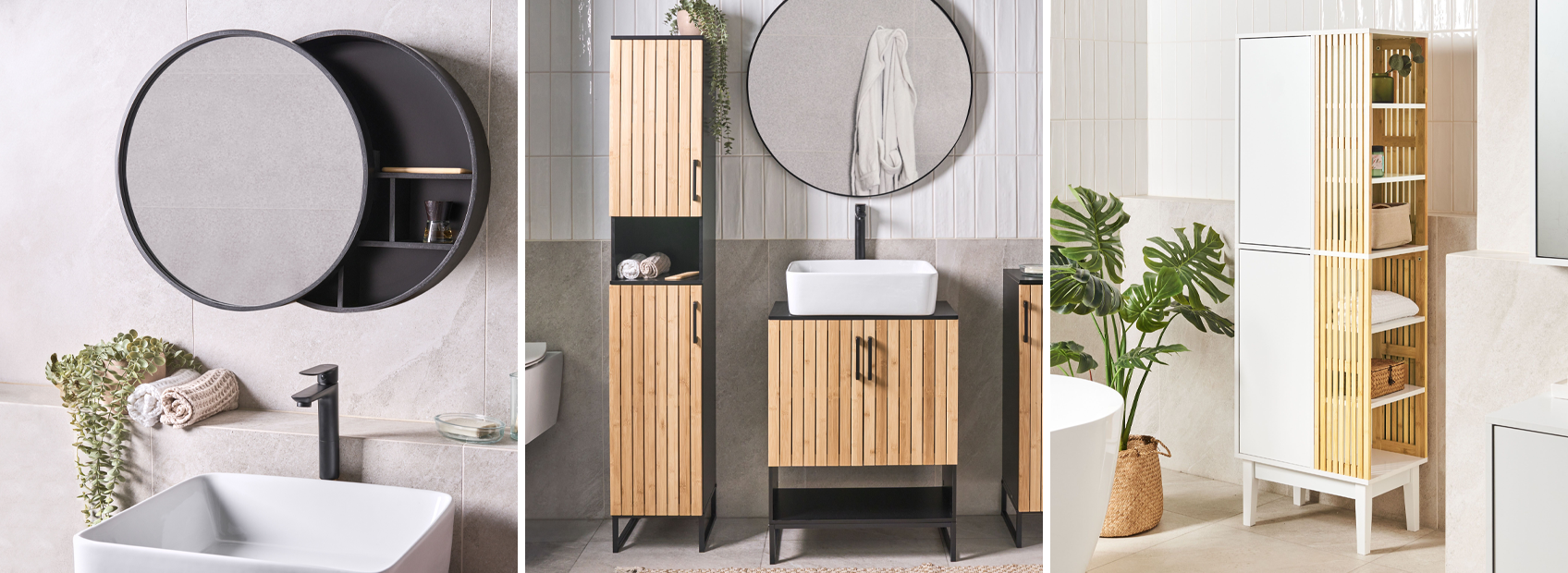
Bathroom cabinets keep toiletries and cleaning supplies out of sight; wall-mounted versions free up floor space in a small bathroom, while freestanding cabinets offer more flexibility if you move things around later. A mirrored cabinet does double duty, combining storage with a reflective surface that helps a small bathroom feel brighter.
For smaller items such as make-up or hair tools, baskets and containers are easier to move and reposition than a fixed drawer, and let you group similar items together at a glance.
Shop now: bathroom cabinets
How can you maximise kitchen storage?
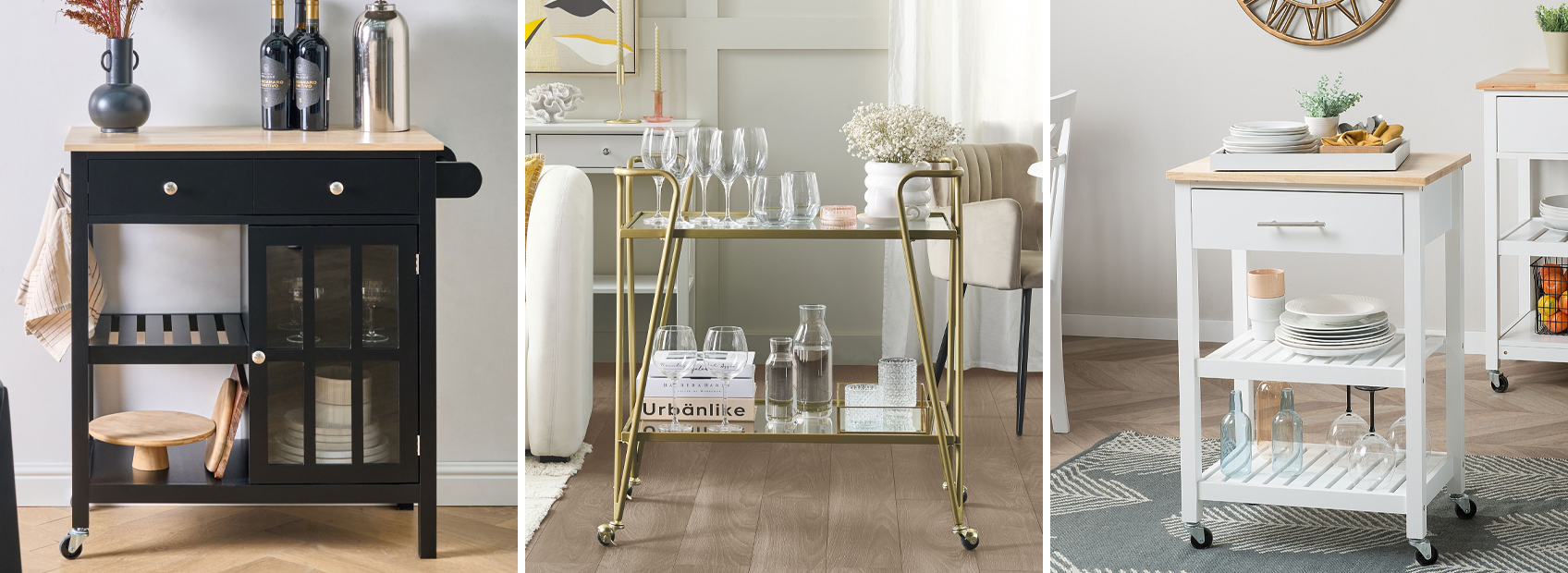
A kitchen trolley adds mobile storage and extra worktop space, which is particularly useful in a smaller kitchen where a fixed unit isn't practical. A display cabinet with glass fronts works well for dishes, glassware or cookbooks you want to see at a glance, provided it's arranged with some restraint so it doesn't look cluttered.
Shop now: kitchen trolleys
What storage keeps a kids' room organised?
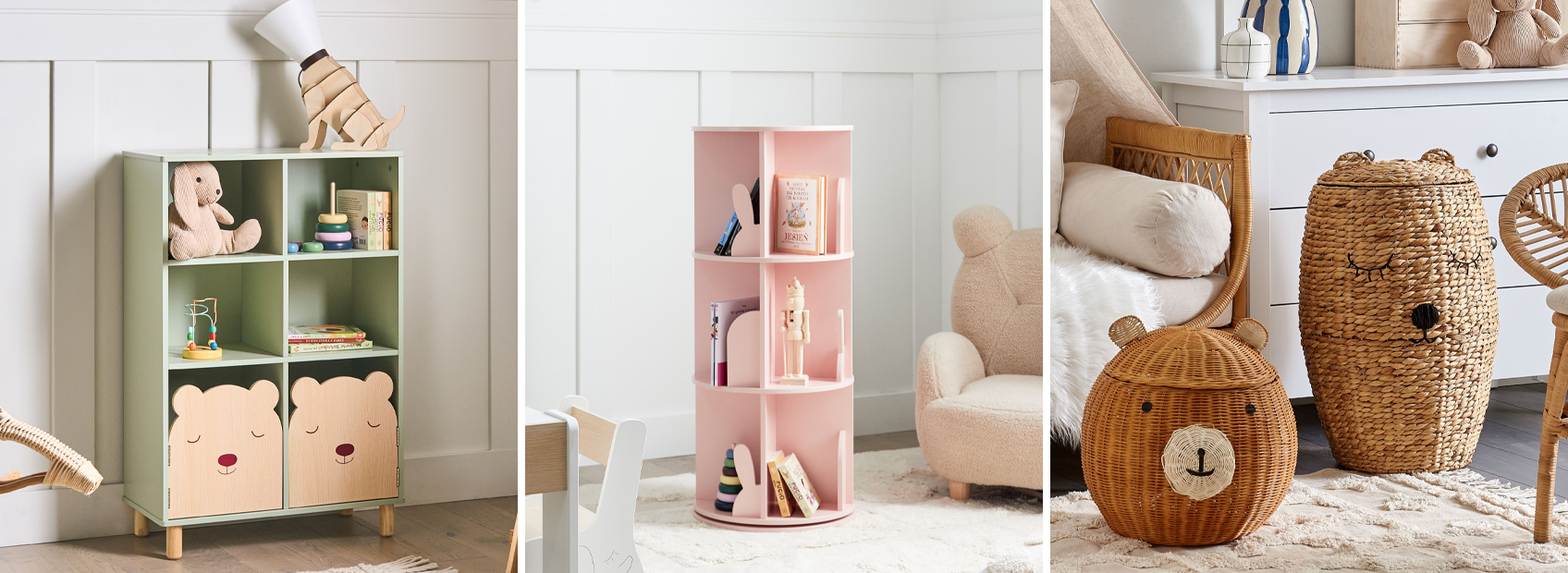
Cabinets and drawers sized for a child's room keep toys, books and clothes contained without taking over the space, and a simpler, sturdier design tends to outlast a decorative one through daily use. Storage baskets are easier for a child to use unassisted than a drawer, which helps tidying become a habit rather than a chore.
Shop now: kids storage and kids storage baskets
What storage does a home office need?
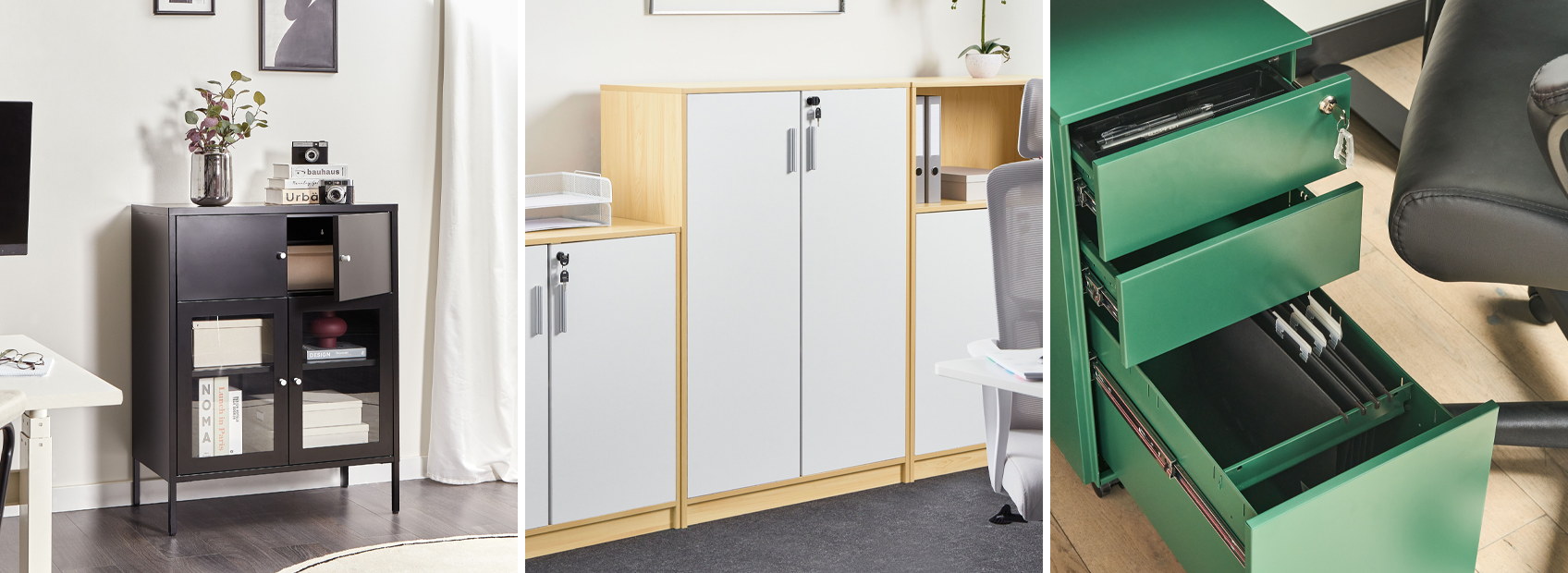
Office cabinets keep documents and supplies out of the way; a lockable cabinet is worth choosing if you keep anything sensitive at your desk. A bookcase adds space for reference books, files and folders while also giving the room some visual character beyond a plain desk and chair.
Shop now: office cabinets and bookcases
What storage suits a hallway?
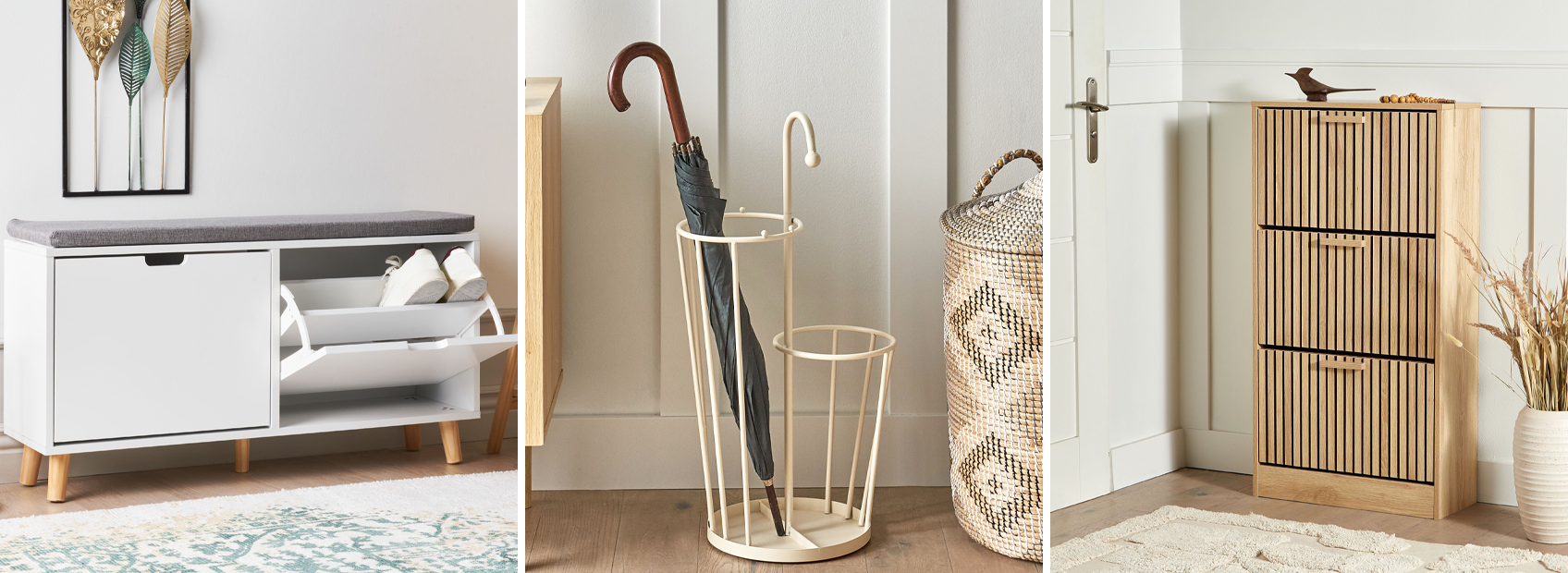
A shoe cabinet keeps footwear out of sight and off the floor, which matters most in a hallway with little natural surface space. A coat stand handles jackets, bags and scarves for quick access on the way out, and an umbrella stand is a small addition that stops wet umbrellas becoming a hallway hazard on rainy days.
Shop now: shoe cabinets and coat stands
Open shelving or closed storage: which suits your room?
Both formats appear throughout this guide, so it helps to compare them directly against the same questions before choosing.
What opening mechanism should you choose?
Doors and drawers open in one of three ways, and the choice affects both daily use and long-term upkeep.
Handles
Grip, pull open
The simplest and most durable option, with nothing to service over time, though the handle stays visible on the front of the piece.
Push-to-open
Press, spring releases
Gives a clean, handle-free look — a light press pops the door or drawer open — but the spring mechanism can wear faster than a fixed handle.
Soft-close hinges
Damper slows the close
A damper slows the last few centimetres of closing for a quieter room and less risk of trapped fingers; often combined with push-to-open on the same door.
Summary
Match the piece to the room by deciding whether contents should stay visible or hidden, then measure the exact floor or wall space available, including door swing and drawer clearance. Choose a material suited to the room's humidity, particularly in bathrooms and kitchens, and pick hardware — handles, push-to-open or soft-close — based on how the piece will be used day to day.
- Measure the exact wall space or footprint available, including door swing or drawer clearance
- Decide whether contents need to stay visible (open shelving, glass-front cabinets) or hidden (doors, drawers)
- Match the piece's depth to what it needs to hold, not just its width
- Check the material suits the room's humidity, particularly in bathrooms and kitchens
- Confirm the finish and hardware suit how the piece will be used day to day, e.g. locking for a home office
Frequently asked questions
How do I choose between open shelving and a closed cabinet?
Choose open shelving when you want items on display and are happy to keep them tidy, and a closed cabinet or drawer when you'd rather items were out of sight or the room sees daily clutter. Mixing both in one room is common: display cabinets for a few chosen pieces, closed storage for everything else.
How much wider should a TV stand be than the TV?
As a rule of thumb, choose a TV stand roughly 10 to 15cm wider than the TV on each side, so the screen doesn't look oversized for its base. Beyond width, check the stand can also take the TV's stand or mount fixings and any nearby sockets.
Is glass-front or solid-door storage easier to maintain?
Solid-door storage needs less regular cleaning, since dust and fingerprints don't show the way they do on glass. Glass-front cabinets need more frequent wiping down but let you display contents without opening the door.
Should storage furniture in a bathroom or kitchen be treated differently?
Yes — humidity and splashes mean bathroom and kitchen storage should use moisture-resistant materials rather than untreated wood, which can warp or swell over time. Wall-mounted or raised units also help keep the base of the cabinet away from standing water.
What's the best material for storage furniture?
Engineered wood suits most rooms and holds up well under normal use at a lower cost than solid wood. Solid wood lasts longer and can be refinished, but costs more; metal and moisture-resistant finishes are the better choice for bathrooms, kitchens, and other humid rooms.