
 Free Delivery & Return
 365-Day Returns
 10 Million Happy Customers
 500,000 Products in Stock


Mirrors (360)


Mirrors
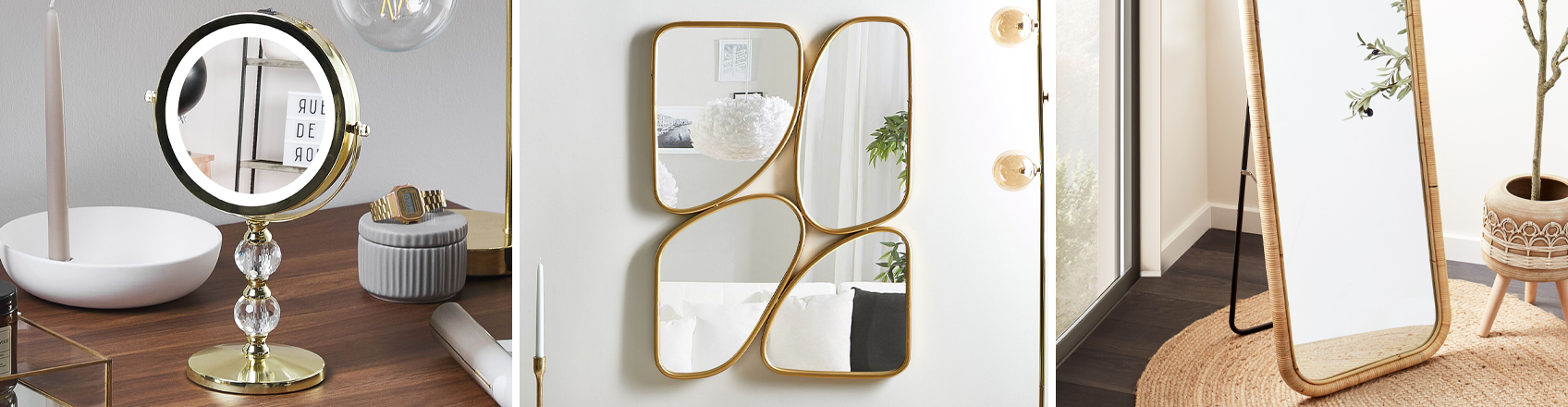
Mirrors combine everyday functionality with interior decoration. They help reflect light, create an impression of additional space and complement furniture and accessories. Choosing the right type, size and placement allows you to make the most of a mirror in any room.
What are the different types of mirrors?
Mirrors differ in their construction, mounting method and intended purpose. Some are designed for everyday grooming, while others provide a full-length reflection, additional storage or a decorative focal point.
Wall mirrors
Wall mirrors are a versatile choice for living rooms, hallways, bedrooms and dining areas. Mounted directly onto a wall, they provide a reflective surface without occupying valuable floor space. Available in various shapes, sizes and frame finishes, they can serve as both practical accessories and decorative elements.
Shop now: Wall mirrors
Standing mirrors
Standing mirrors are particularly useful in bedrooms and dressing areas, where a full-length reflection helps with choosing outfits. Freestanding models can be repositioned when needed and usually require no wall mounting, although any supplied safety fittings should be installed according to the manufacturer's instructions.
Shop now: Standing mirrors
Bathroom mirrors
Bathroom mirrors provide a clear reflection for daily grooming and personal care. Models designed for humid environments are available in various shapes and sizes to complement different washbasins and bathroom furniture. Selected designs feature integrated LED lighting, touch controls or anti-fog functions.
Shop now: Bathroom mirrors
Makeup mirrors
Makeup mirrors are designed for tasks that require a close-up reflection, such as applying makeup, shaving or styling hair. Compact tabletop models are suitable for dressing tables and bathroom countertops. Magnification, adjustable angles and integrated lighting can make detailed grooming easier.
Shop now: Makeup mirrors
Mirrored cabinets
Mirrored cabinets combine a mirror with enclosed storage, making them especially practical in bathrooms with limited space. They provide easy access to toiletries and personal care products while keeping the area around the washbasin organised.
Shop now: Mirrored cabinets
Which mirror shape works best?
- Round and oval mirrors soften interiors dominated by straight lines and angular furniture.
- Rectangular mirrors complement structured furniture arrangements and are suitable for full-length reflections.
- Arched mirrors introduce a curved silhouette while retaining a relatively large reflective surface.
- Asymmetrical mirrors create a decorative focal point and complement contemporary interiors.
Which mirror frame should you choose?
Wooden frames introduce natural textures and complement Scandinavian, rustic and traditional interiors. Metal frames suit modern, industrial and elegant arrangements, depending on their finish. Upholstered frames, covered in fabrics such as bouclé or velvet, add softness and texture, making them particularly suitable for bedrooms, dressing areas and living rooms. Frameless mirrors offer a more understated appearance and work well in minimalist spaces.
Match the mirror to the proportions of your furniture
When placing a mirror above a sideboard, console table or washbasin, use the width of the furniture as a visual reference. A mirror that is slightly narrower than the furniture underneath usually creates a balanced arrangement. Leave enough space around the frame so that it does not appear crowded by surrounding objects.
How can mirrors make a room look bigger and brighter?
Mirrors create an impression of additional space by reflecting light and surrounding areas. A large mirror can make a narrow hallway, compact bedroom or small living room appear more open without changing its layout. Place a mirror opposite or near a window to reflect daylight into darker parts of the room. In spaces with limited natural light, position it where it can reflect lamps or other light sources without causing uncomfortable glare. Consider what will appear in the reflection. An open part of the room, an attractive piece of furniture or a well-lit wall generally creates a more effective result than a cluttered area.
What features should you look for when buying a mirror?
Depending on where and how you plan to use a mirror, additional features can improve its everyday functionality.
- Integrated LED lighting provides additional illumination for grooming and everyday use.
- Adjustable brightness allows you to adapt the lighting to different times of day and tasks.
- Adjustable light colour offers different lighting conditions, from warmer to cooler tones.
- Anti-fog functions help keep part of the reflective surface clear after a hot shower.
- Magnification makes detailed tasks such as applying makeup or shaving easier.
- Adjustable angles allow you to position the reflective surface according to your needs.
- Integrated storage helps keep toiletries and personal care accessories organised.
Check bathroom suitability and installation requirements
If you are buying a mirror for a bathroom, check whether it is intended for use in humid environments. For models with integrated lighting or other electrical features, check the IP rating, permitted installation location and power connection requirements before mounting.
What should you check before buying a mirror?
Before choosing a mirror, make sure its dimensions, construction and features suit the intended location.
- Measure the available wall or floor space, including clearance around the frame.
- Choose a mirror size that provides the reflection you need.
- Check the weight of the mirror and its mounting requirements.
- Make sure the frame material and finish complement the surrounding furniture.
- Confirm bathroom suitability if the mirror will be exposed to humidity.
- Check the power supply and installation requirements for illuminated models.
Frequently asked questions
At what height should you hang a mirror?
Hang a mirror used for everyday grooming so that the centre of its reflective surface is approximately at eye level. For mirrors placed above furniture, adjust the height according to the furniture dimensions and the available wall space.
How do you clean a mirror without leaving streaks?
Use a soft microfibre cloth and a suitable glass cleaner to remove fingerprints and marks. Apply the cleaning solution to the cloth rather than directly onto the mirror to prevent moisture from reaching the edges and damaging the reflective backing.
Can you use more than one mirror in the same room?
Yes, multiple mirrors can serve different practical and decorative purposes within the same room. Avoid positioning them directly opposite each other unless you deliberately want to create repeated reflections.
Where should you avoid hanging a mirror?
Avoid hanging mirrors where opening doors or moving furniture could strike the glass, or on walls that cannot safely support their weight. Also avoid positions where reflections from windows or lamps create distracting glare, particularly near desks, televisions and seating areas.
What is a bevelled mirror?
A bevelled mirror has angled glass edges that create a decorative border around the reflective surface. This finish adds visual depth and can provide a decorative effect without a separate frame.