
 Free Delivery & Return
 365-Day Returns
 10 Million Happy Customers
 500,000 Products in Stock

Rattan, Wicker And Bamboo: What Is The Difference?
Reviewed by the Beliani Content Team · Updated October 2026
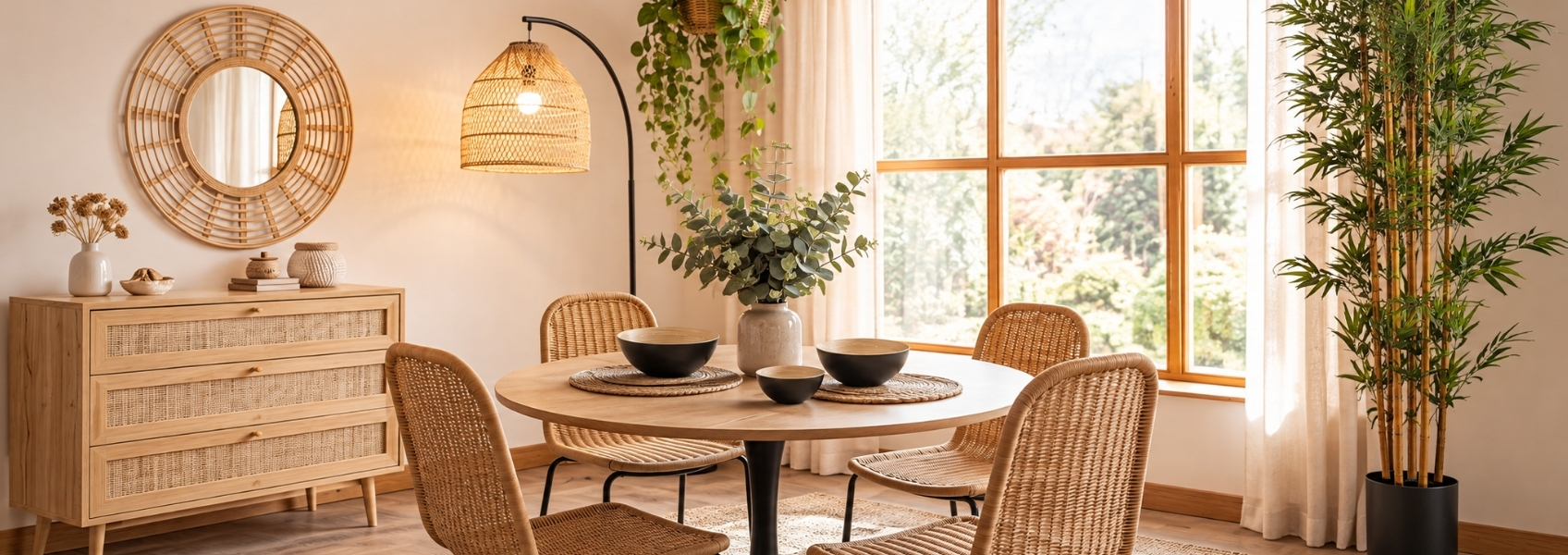
Furniture descriptions often group rattan, wicker and bamboo together, but the terms do not mean the same thing. The difference matters because a chair that looks suitable for a garden may actually be meant for a dry indoor room. This guide explains how to read the material name, choose the right option for each space and avoid the most common outdoor furniture mistake.
In short
What is the difference between rattan, wicker and bamboo?
Rattan and bamboo are natural plant materials, but wicker is not a material at all: it's a weaving technique. Rattan comes from the solid, flexible stems of climbing palms, mainly grown across South East Asia. Bamboo is a fast-growing woody grass with hollow, jointed stems. A "wicker" piece can be woven from either of these fibres, or from willow, seagrass or a weatherproof synthetic resin, so the word "wicker" on its own never tells you what a piece is actually made from.
What does each term mean on a furniture label?
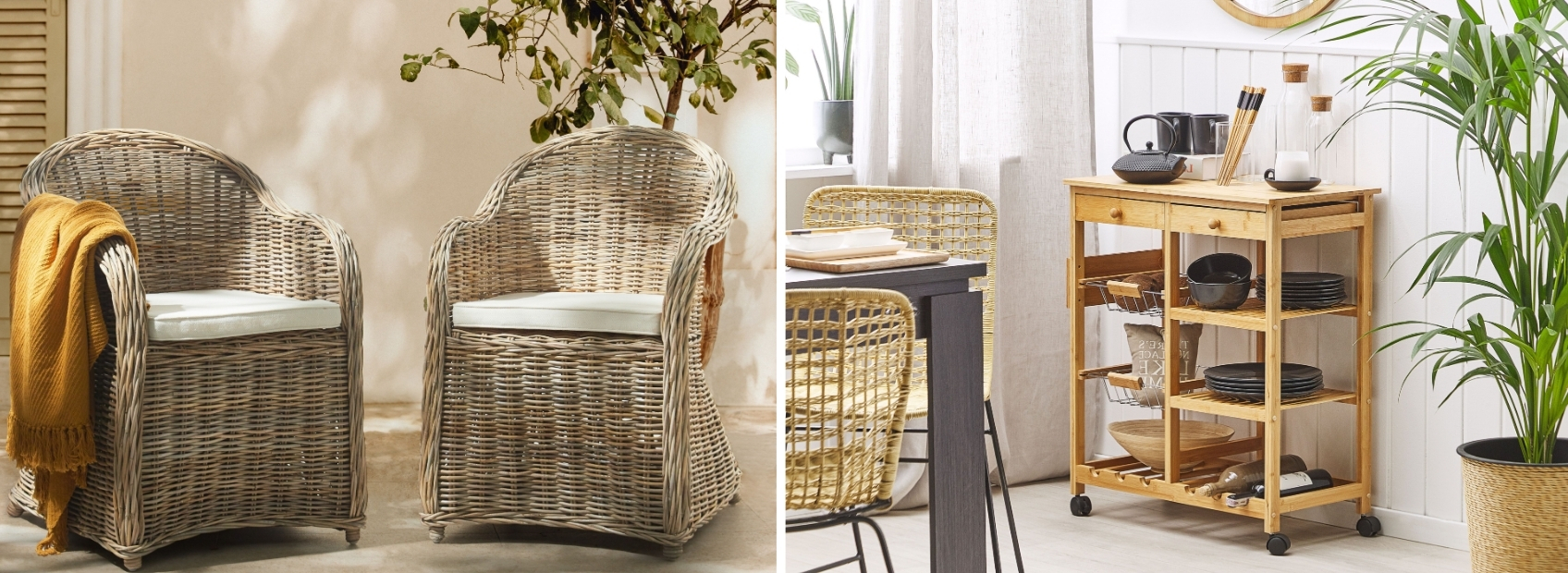
The safest way to compare rattan, wicker and bamboo is to separate the material from the construction method. A product name may describe the look, while the material line tells you whether the piece is natural fibre, bamboo or synthetic resin.
Material
Natural rattan
Rattan is a natural cane that can be bent into curved frames or split into strands for weaving. It suits living rooms, bedrooms and covered verandas, but it should not be treated as rainproof garden furniture.
Material
Bamboo
Bamboo has hollow, jointed stems, so bamboo furniture often feels lighter and more rigid than natural rattan. It works best in dry indoor spaces or sheltered areas where it is not exposed to standing water.
Technique
Wicker
Wicker means woven construction. It can be made from natural rattan, bamboo, willow, seagrass or synthetic resin, so the word wicker alone does not tell you whether the piece is suitable outdoors.
Shop now: rattan furniture
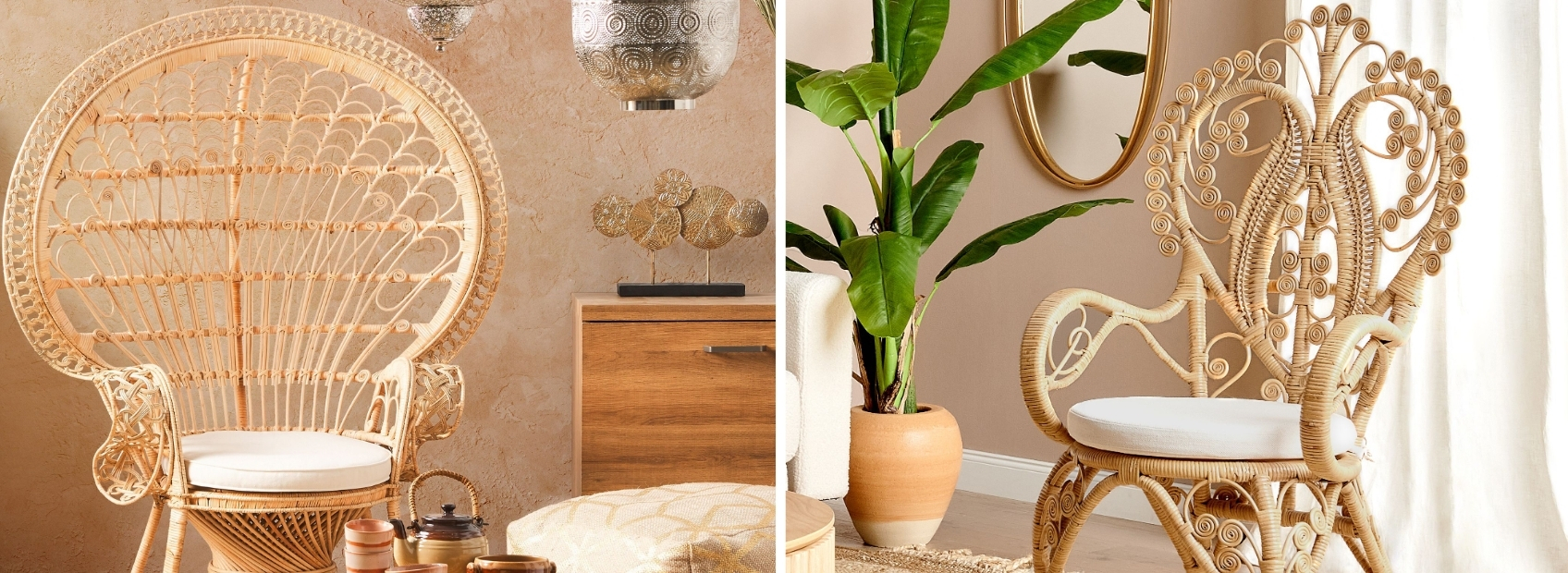
The label detail that matters most
If a product is described as rattan garden furniture, check whether the material is natural rattan or PE rattan. PE rattan, resin wicker and synthetic wicker usually indicate a weather-resistant outdoor weave; natural rattan does not.
How do rattan, bamboo and PE rattan compare?
The materials differ most in structure, suitable placement and maintenance. Wicker is not included as a separate material here because it describes the way a piece is woven rather than what it is made from.
| Material | Structure | Best placement | Main care check |
|---|---|---|---|
| Natural rattan | Solid natural cane, often bent or woven | Living room, bedroom, conservatory or dry covered veranda | Keep dry, avoid strong direct heat and follow any conditioning guidance |
| Bamboo | Hollow, jointed natural stems or split strips | Dry indoor rooms and sheltered spaces | Protect from standing water and check sealed surfaces for cracks |
| PE rattan | Synthetic polyethylene strands woven around a frame | Balcony, patio and garden furniture | Clean with mild soapy water and protect or store out of season to extend its life |
Read more: outdoor furniture material guide
How should you choose for each space?
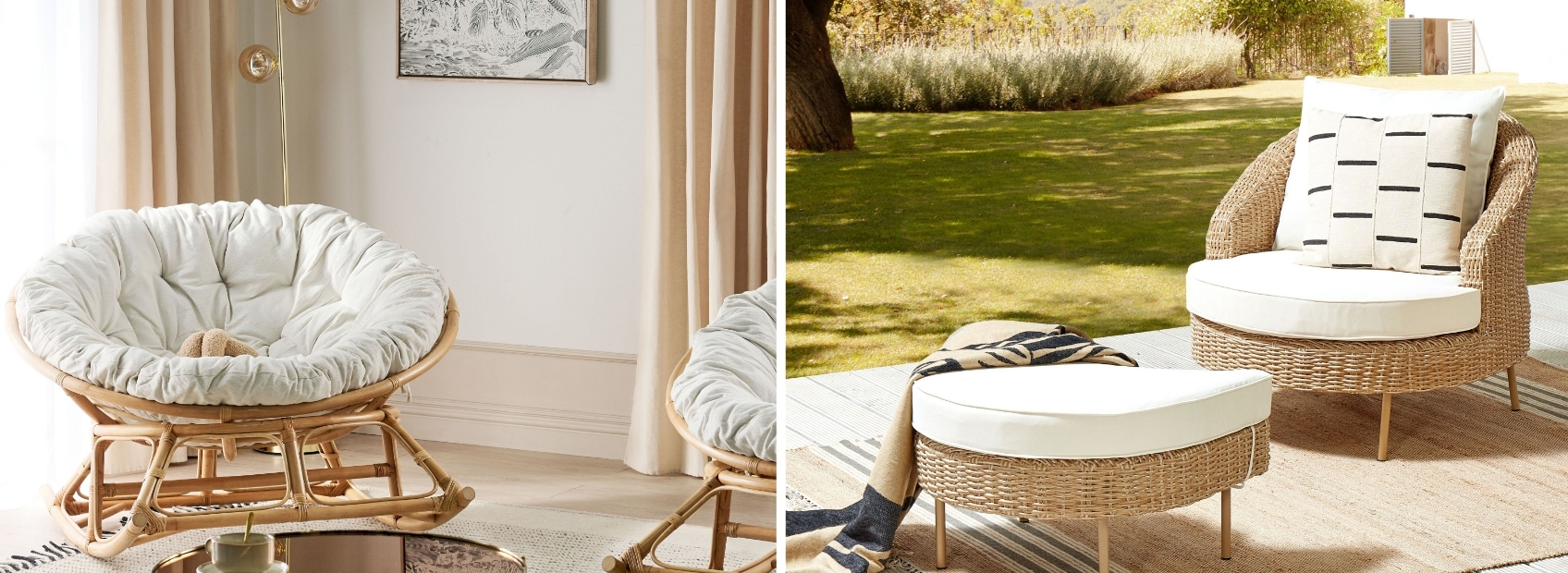
Start with where the furniture will live most of the time. The same woven look can be sensible or unsuitable depending on whether the space is dry, sheltered or fully exposed.
Dry indoor room
Choose natural rattan or bamboo
These materials give the most natural texture and work well away from damp, rain and harsh heat. They are best for accent chairs, side tables, cabinets and decorative seating.
Covered outdoor space
Check how sheltered it really is
A covered balcony or veranda can suit natural materials if it stays dry, but wind-driven rain and strong sun still cause damage. If the area often gets wet, choose PE rattan instead.
Open patio or garden
Choose PE rattan or resin wicker
For furniture exposed to rain and direct sun, synthetic rattan is the safer choice. A rust-resistant frame and indoor cushion storage matter as much as the weave.
Shop now: garden chairs and rattan and wicker armchairs
What to check before buying
Before choosing rattan, bamboo or wicker furniture, check the practical details that decide where the piece can be used and how much care it will need.
- Read the material line, not only the product title, and confirm whether the weave is natural rattan, bamboo, PE rattan or another synthetic resin
- For exposed outdoor use, choose PE rattan or resin wicker with a rust-resistant frame such as aluminium or treated steel
- For natural rattan or bamboo, avoid rooms with sustained damp, strong direct heat or frequent temperature swings
- Check whether cushions have removable covers and can be stored separately from the frame during rain or winter
- Look at the care instructions before buying, especially for oiling, sealing, cleaning products and off-season storage
- For mixed-material furniture, check every component separately, including legs, frame, tabletop, weave and cushions
Frequently asked questions
Can PE rattan still fade in strong sun?
Yes, it can, especially if the resin is not UV-stabilised or the furniture is left uncovered for long periods. A cover, shaded placement and off-season storage help the colour and weave last longer.
Can natural rattan furniture be cleaned with water?
Use as little water as possible. A slightly damp cloth is usually enough, but soaking the cane or leaving water in the weave can make natural fibres swell, stain or weaken.
Is wicker furniture always hand-woven?
No. Some wicker furniture is hand-woven, while some synthetic wicker is machine-made or semi-machine-made. If hand weaving matters for appearance or craftsmanship, check the product details rather than relying on the word wicker alone.
Should rattan garden furniture cushions be stored indoors?
Yes. Even when the frame and PE rattan weave are weather-resistant, cushions usually last longer when kept dry and stored indoors during heavy rain, winter or long periods of non-use.
Can bamboo furniture be used in a conservatory?
Yes, if the conservatory is dry, ventilated and not exposed to intense direct heat all day. Strong sun and temperature swings can dry bamboo out, so blinds, ventilation and occasional care checks are useful.
