
 Free Delivery & Return
 365-Day Returns
 10 Million Happy Customers
 500,000 Products in Stock

Minimalist Furniture: Essential Pieces for a Clean, Clutter-Free Home
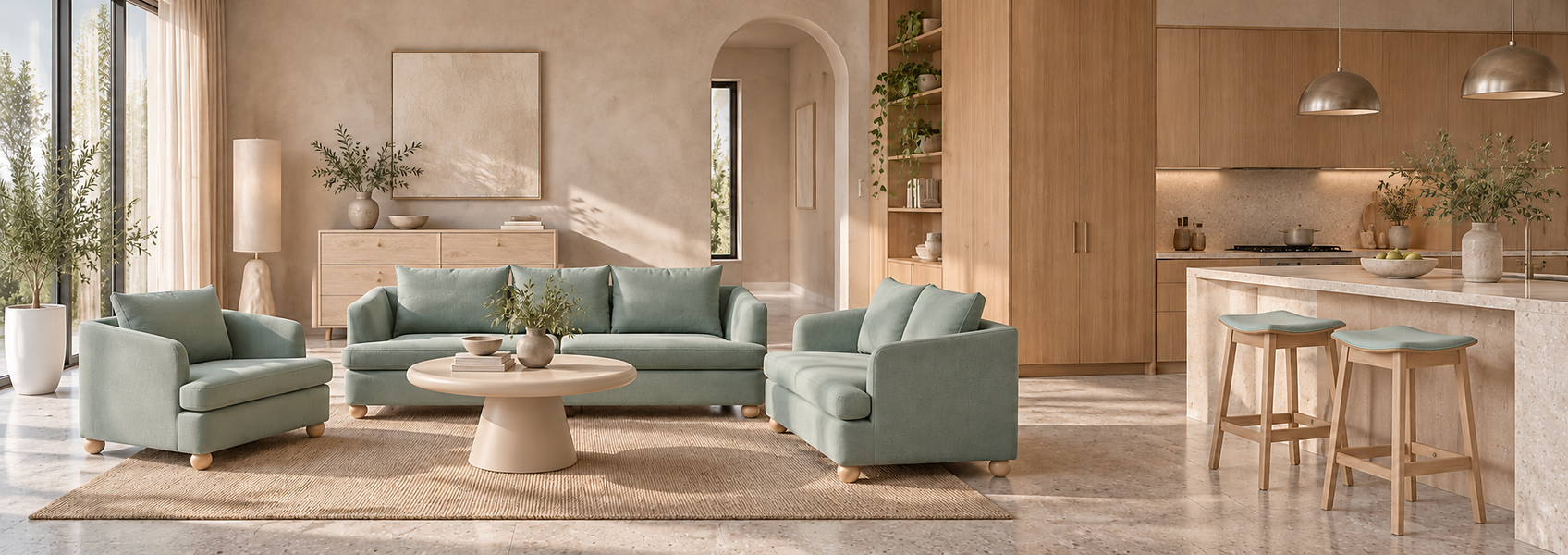
Minimalist furniture is about giving every piece in a room a reason to be there. Clean lines, honest materials, and plenty of breathing room create a calmer, more considered space.
What characterises minimalist style?
Minimalist style is built around restraint - every piece should earn its place through function, proportion, or quality rather than decoration. Lines are kept clean and uncluttered, with hardware and detailing often hidden rather than highlighted. Negative space is treated as part of the design, not empty space to be filled. The result should feel calm and spacious, never bare or cold.
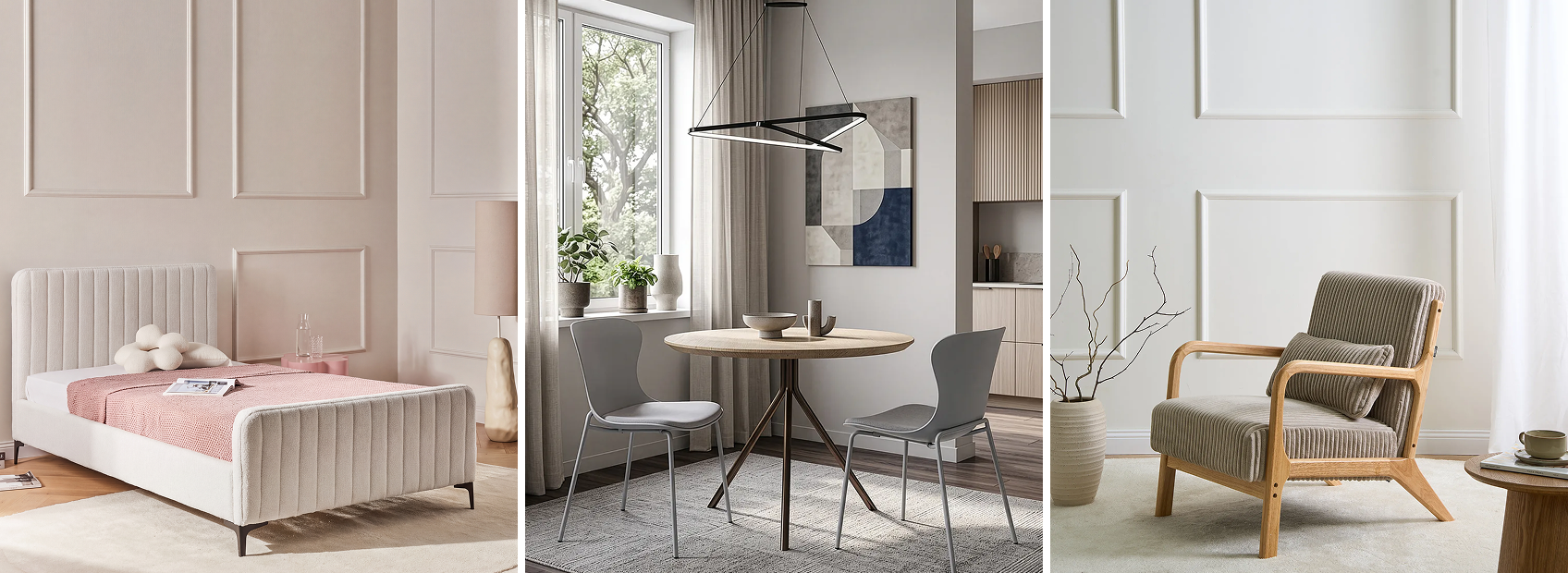
That said, certain features characterise the minimalist style:
- Clean, simple silhouettes: straight edges, low profiles, and the absence of ornate detailing let the shape of a piece speak for itself.
- Function-first design: hidden storage, multi-purpose pieces, and tidy proportions reduce visual clutter as much as physical clutter.
- Quality over quantity: fewer, better-made pieces replace a room full of smaller items.
- Deliberate negative space: empty space around furniture is part of the design, giving the eye room to rest.
What is the colour palette of minimalist furniture?
A minimalist palette stays close to neutrals - white, warm grey, soft beige, and black form the backbone of most rooms. Colour is used sparingly, often through a single muted tone rather than a mix of several. Texture does a lot of the work that colour would in a bolder style, adding interest without adding visual noise.
What materials should you look for?
Minimalist furniture relies on honest materials that look good without extra treatment or decoration. Fewer materials appear in each piece, so the ones that are used need to be right.
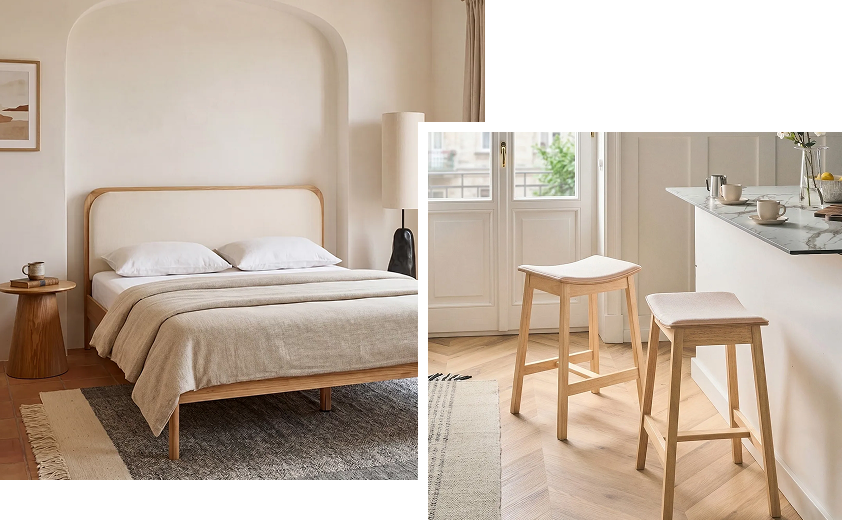
Solid wood
Oak, ash, and beech appear often in minimalist furniture, chosen for their light, even grain rather than heavy figuring. A simple oiled or lightly lacquered finish lets the wood's natural tone show through instead of masking it.
Solid wood
Oak, ash, and beech appear often in minimalist furniture, chosen for their light, even grain rather than heavy figuring. A simple oiled or lightly lacquered finish lets the wood's natural tone show through instead of masking it.
Powder-coated steel
Slim steel frames and legs give furniture a lighter visual footprint than solid wood, which suits the minimalist focus on negative space. A powder-coated finish resists scratches and chipping better than paint, keeping the clean look intact over time.
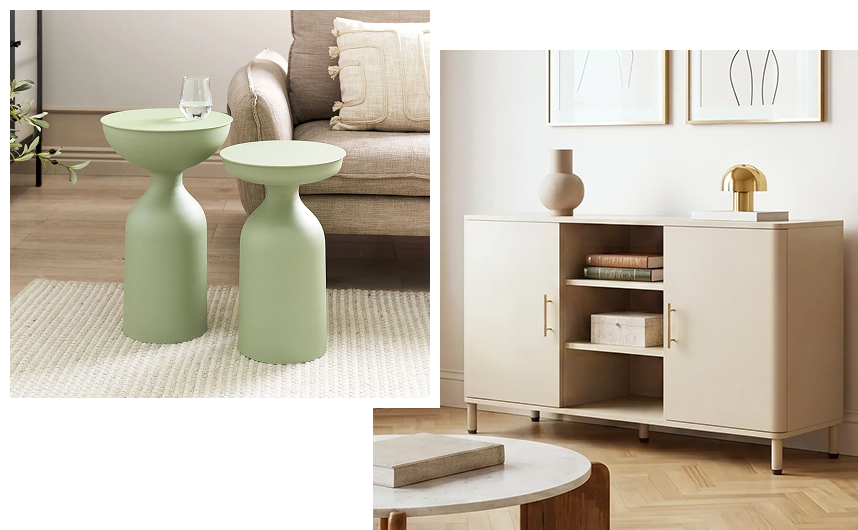
Powder-coated steel
Slim steel frames and legs give furniture a lighter visual footprint than solid wood, which suits the minimalist focus on negative space. A powder-coated finish resists scratches and chipping better than paint, keeping the clean look intact over time.
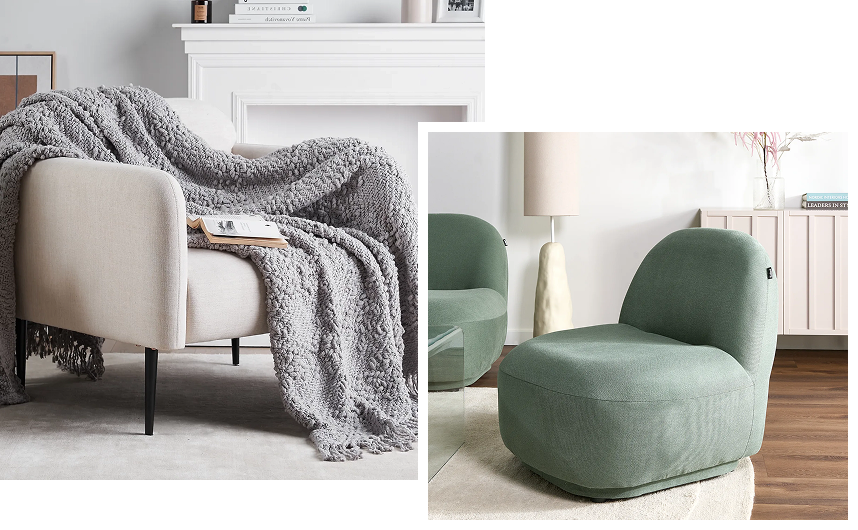
Linen and cotton weaves
Plain-weave linen and cotton upholstery keeps the surface texture subtle rather than busy, which matters more here than in most other styles. Both fabrics soften with washing and wear, ageing in a way that suits the relaxed, low-fuss feel minimalism is going for.
Linen and cotton weaves
Plain-weave linen and cotton upholstery keeps the surface texture subtle rather than busy, which matters more here than in most other styles. Both fabrics soften with washing and wear, ageing in a way that suits the relaxed, low-fuss feel minimalism is going for.
Glass and matt-lacquered surfaces
Glass tabletops keep a piece visually light, letting the legs and frame remain the main focus rather than a bulky top. Matt lacquer does something similar on cabinets and sideboards - a matt surface scatters light evenly rather than reflecting it in one spot, which is part of why it reads as "quieter" to the eye than the same colour in gloss.
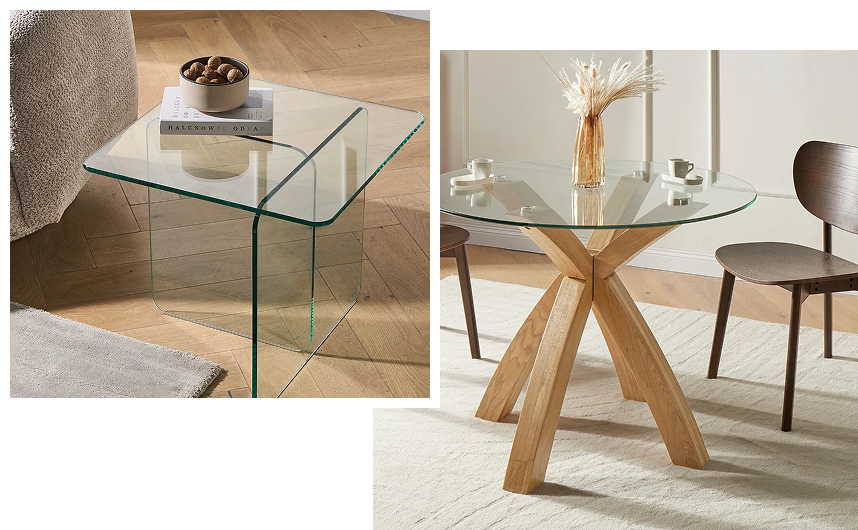
Glass and matt-lacquered surfaces
Glass tabletops keep a piece visually light, letting the legs and frame remain the main focus rather than a bulky top. Matt lacquer does something similar on cabinets and sideboards - a matt surface scatters light evenly rather than reflecting it in one spot, which is part of why it reads as "quieter" to the eye than the same colour in gloss.
How can you spot a genuine minimalist piece?
With so little decoration to hide behind, construction quality becomes more obvious in minimalist furniture than in most other styles. A few details are worth checking before you buy.
Joinery and construction
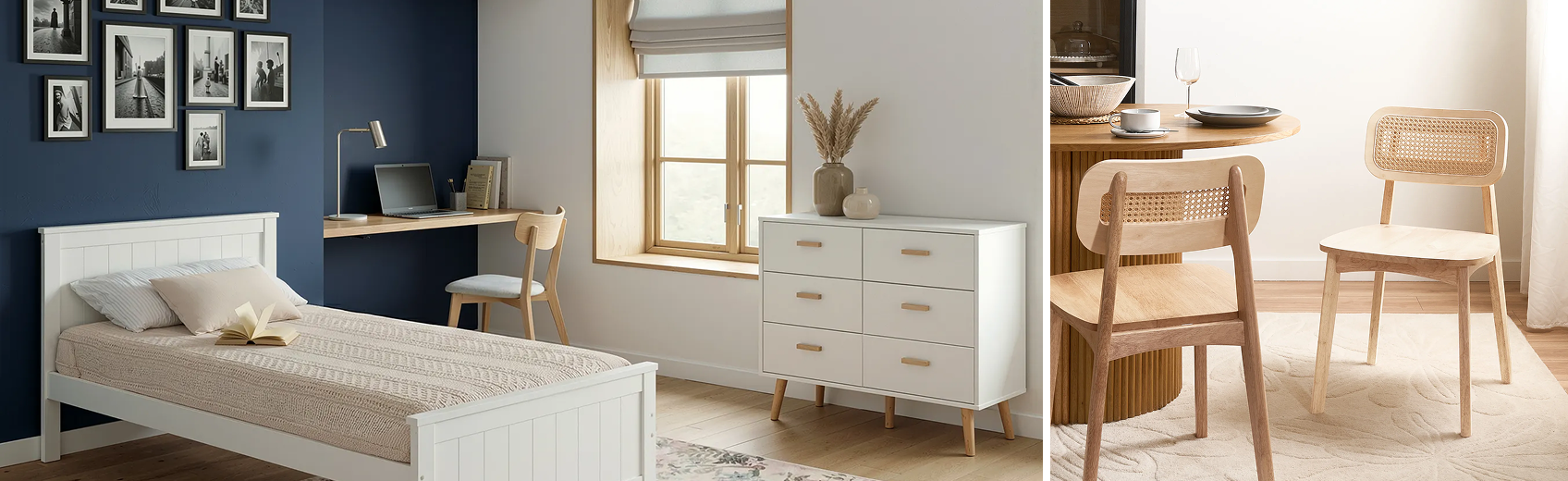
Look for proper joinery - dowelled, mortise-and-tenon, or well-fitted metal brackets - rather than glue and staples holding a frame together. Clean design has nowhere to hide a weak joint, so a solid, well-made frame shouldn't wobble or flex under light pressure.
Finish consistency
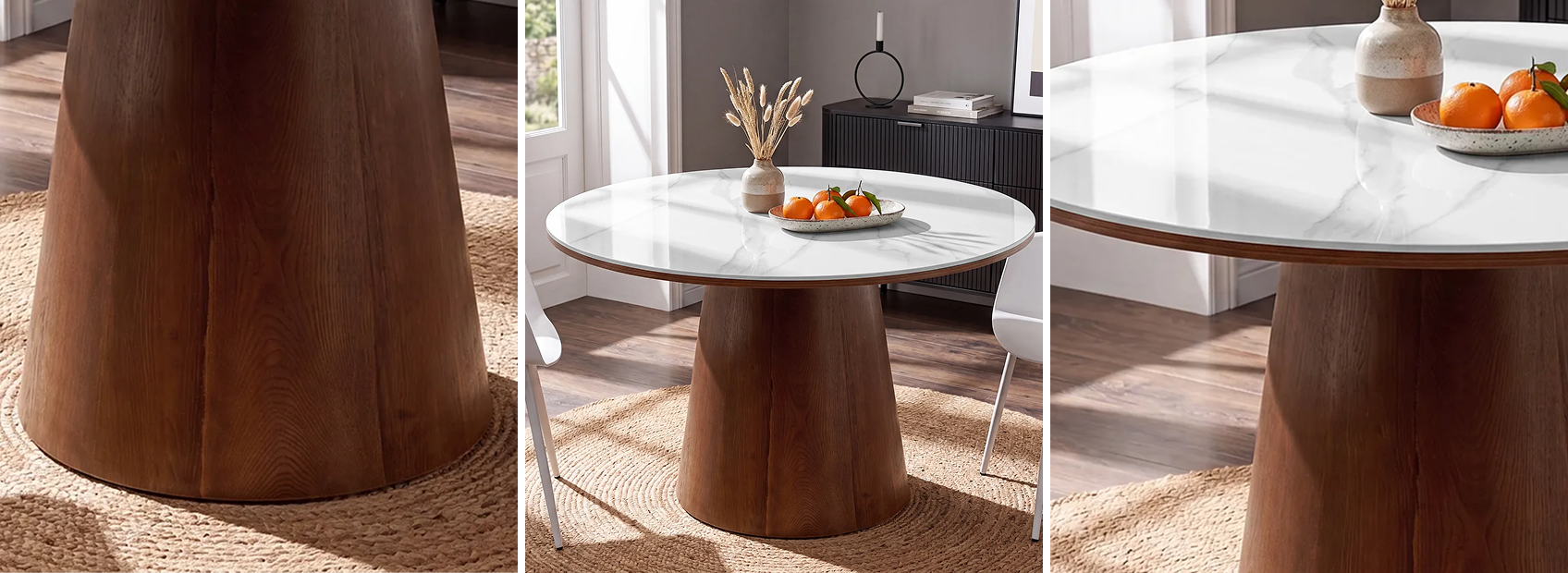
A good matt or lacquered finish should be even across the whole piece, with no patchy sheen or visible brush marks. Edges and corners should be smooth and consistent, since minimalist furniture often leaves them exposed rather than trimmed or covered.
Hidden hardware
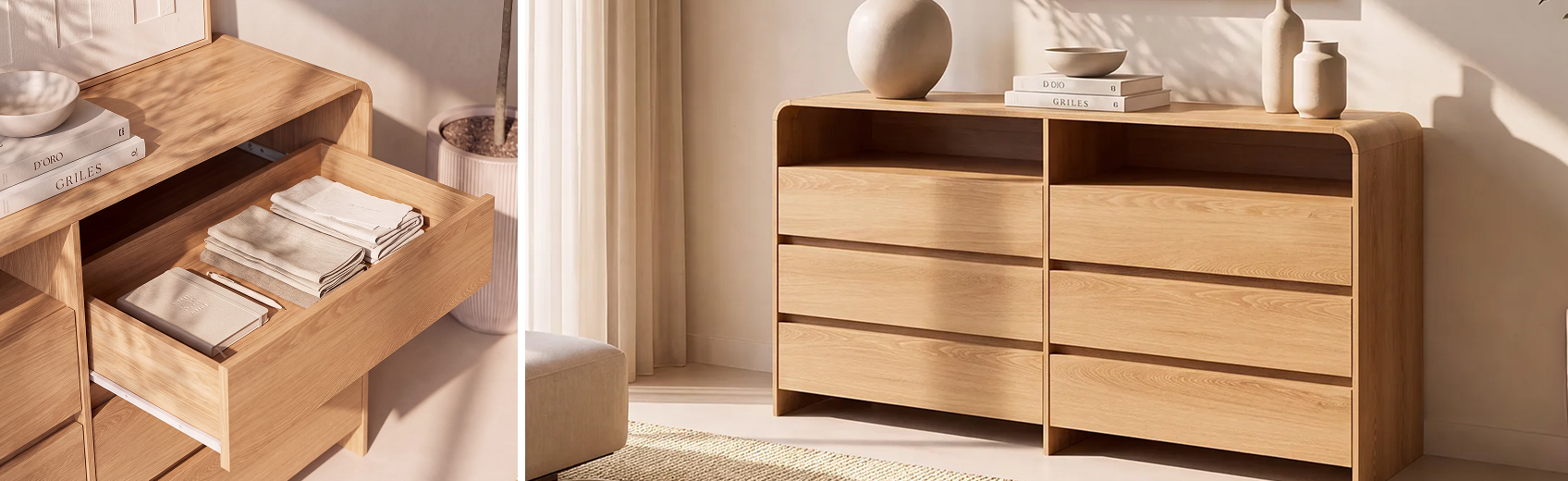
Hinges, runners, and fixings are usually designed to stay out of sight, so check that doors and drawers close smoothly and sit flush when shut. Visible gaps or hardware sitting proud of the surface usually point to lower-precision manufacturing.
Proportion and balance
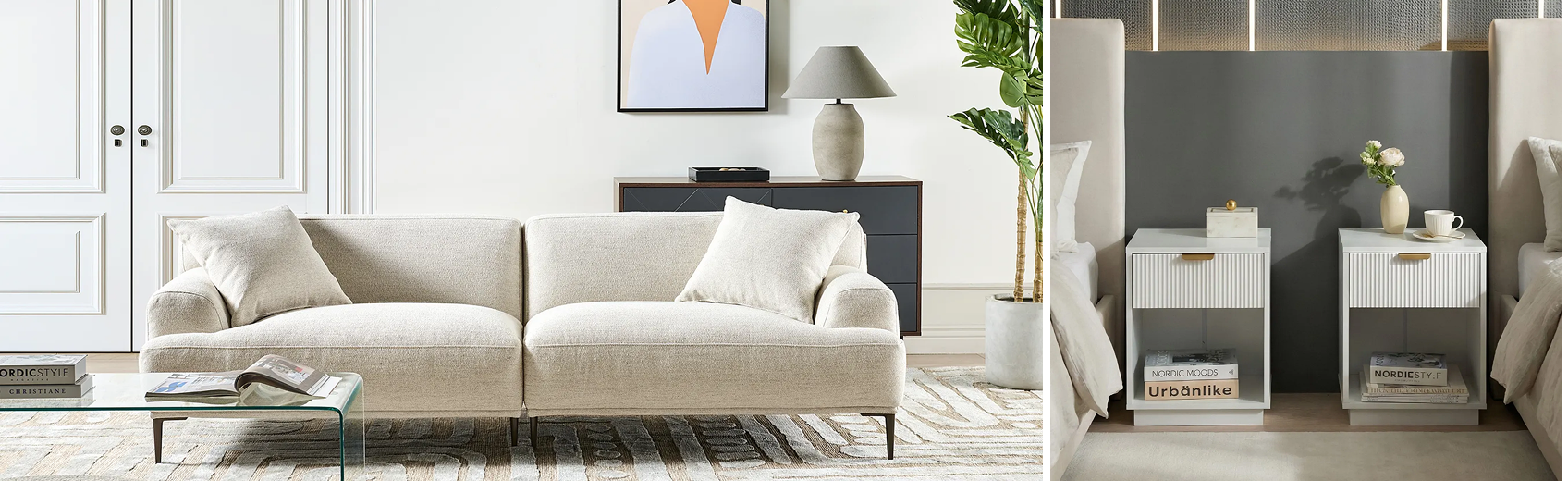
Minimalist pieces rely on good proportions rather than decoration to look right, so a well-designed piece should look balanced from every angle, not just face-on. Legs, frames, and tabletops should feel proportionate to each other rather than oversized or spindly.
What other styles pair well with minimalist?
Minimalist furniture works as a calm base for several other styles, as long as you keep the overall look edited rather than crowded.
- Scandi: pale wood tones and a shared focus on function make these two styles close cousins.
- Japandi: blending Japanese and Scandinavian influences leans even further into negative space and natural materials.
- Industrial: exposed metal and simple forms add a slightly rawer edge without disrupting the clean lines.
- Contemporary: smooth surfaces and current silhouettes slot in naturally alongside minimalist pieces.
How can you bring a minimalist touch into your home?
Going minimalist doesn't mean starting from scratch - it's more about rearranging what's already there and choosing new pieces carefully.
- Edit before you add. Clear out pieces that don't serve a clear purpose before introducing anything new.
- Choose multi-functional furniture. A storage bench or extendable table does more work with less visual clutter.
- Leave space around furniture. Resist the urge to fill every wall or corner - empty space is part of the look.
- Invest in fewer, better pieces. One well-made sofa or table will outlast and outshine several cheaper alternatives.
