
 Free Delivery & Return
 365-Day Returns
 10 Million Happy Customers
 500,000 Products in Stock


Kids Room


Kids' Room
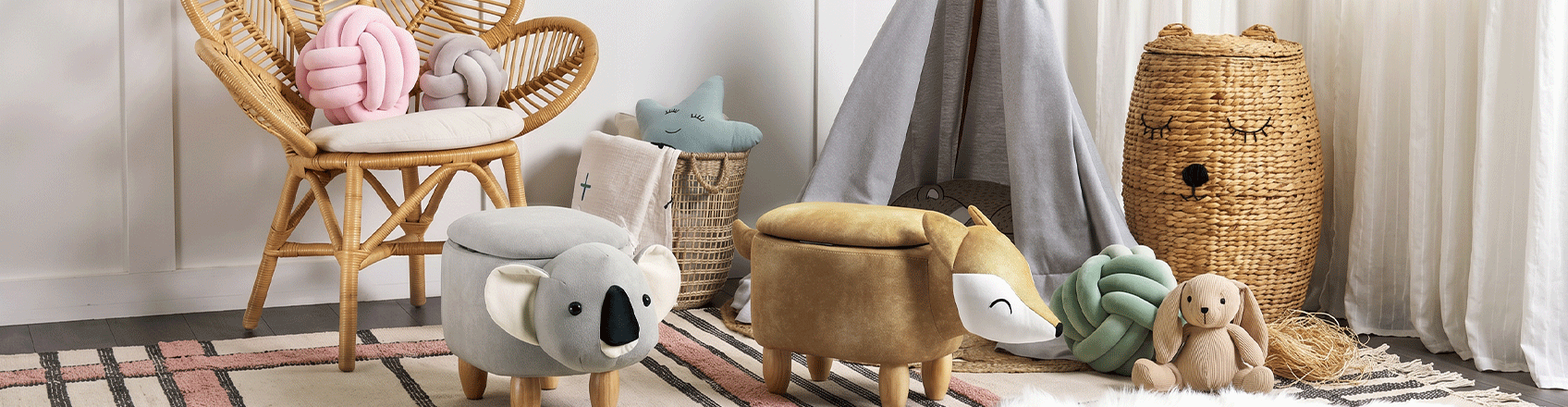
A child's room has to do a lot of jobs at once: a cosy spot for sleep, a corner for homework, and enough space for toys, books and whatever the latest obsession happens to be. It also has to keep up as your child grows from climbing onto furniture to doing their own homework at a desk. This guide walks through the beds, materials, study spots and storage that make a kids' room safe, practical and fun to grow up in.
How do you select the right bed for a children's room?
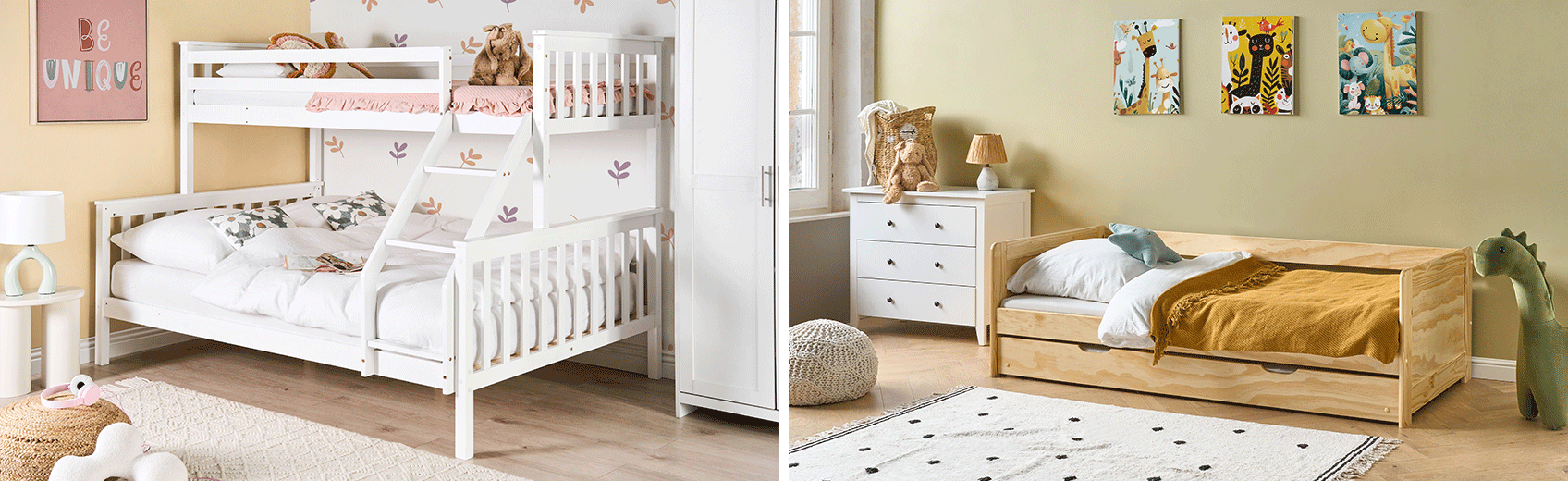
The bed serves as the focal point of a child's bedroom, and selecting the appropriate style depends on room layout, available floor space, and the child's age. For smaller or shared rooms, bunk beds or high sleepers can save space by opening up valuable floor area for play or study. Single wooden or upholstered frames work well for standard rooms. Beds featuring integrated drawers or pull-out trundles are useful for storing bedding or accommodating overnight guests.
Space-saving
Bunk beds and high sleepers
Best suited to smaller or shared bedrooms. Bunk beds provide two sleeping spaces within one bed footprint, while high sleepers leave room underneath for a desk, storage or play area.
The upper sleeping level is not suitable for children under six. Check the manufacturer's age recommendations and allow enough ceiling clearance.
Everyday comfort
Single wooden or upholstered beds
Well suited to standard-sized children's bedrooms. A single bed provides an accessible sleeping area and can be positioned against a wall to leave more room for other furniture.
Wooden frames are generally easy to wipe clean, while upholstered frames offer a softer finish but need regular fabric care.
Multifunctional
Storage and trundle beds
A practical option for rooms that need extra storage or occasional guest accommodation. Built-in drawers can hold bedding, clothes or toys, while a trundle provides an additional pull-out sleeping space.
Check that there is enough floor clearance to open the drawers or extend the trundle fully.
Finding the right support for a restful sleep
A durable bed frame must be paired with a suitable mattress to provide your child with proper spinal alignment and healthy support throughout the night. Whether choosing a pocket-sprung mattress, a breathable foam construction, or a hybrid layout, selecting the correct firmness level is essential for growing bodies.
Read more: how to choose a mattress
What should you look for in safe and durable kids' furniture?
Safety and everyday durability are the key criteria when choosing bedroom furniture for kids.
- Sturdy materials: natural solid wood, high-grade MDF or metal frames stand up to active daily use.
- Rounded edges: smooth, rounded corners cut the risk of bumps and injuries during play.
- Non-toxic finishes: water-based paints and finishes keep the furniture safe for little hands.
- Robust hardware: hinges, drawer runners and fixings need to hold up to daily opening, closing and the odd bit of climbing.
- Wall-anchoring: taller pieces such as wardrobes, chests of drawers and bookcases need standard anchoring points fitted to stay stable and prevent tipping.
How do you create an ergonomic study area?
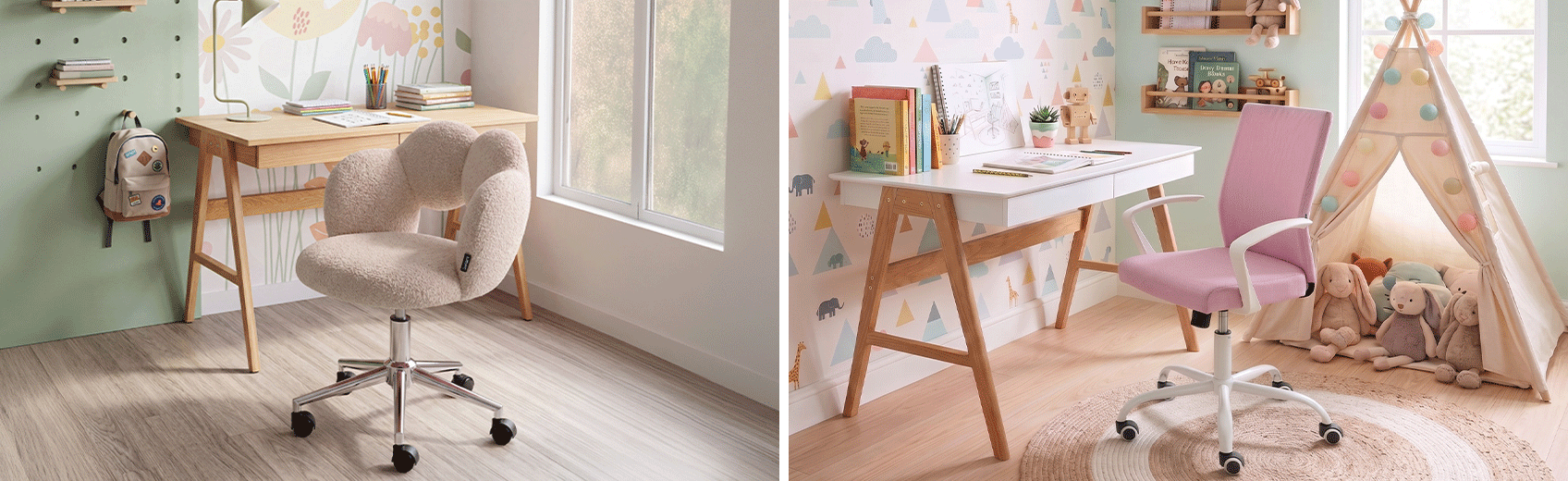
A productive learning environment requires furniture that adapts to a child's posture and height. Pair a sturdy desk with an ergonomic chair that provides proper lumbar support to encourage good sitting habits during homework or creative sessions. Desks featuring built-in drawers or upper shelving help children keep their textbooks, notebooks, and writing materials organised and within easy reach, minimising desktop clutter. Positioning the study area near a natural light source, or adding a focused desk lamp, ensures comfortable visibility and reduces eye strain during evening reading.
What are the best storage solutions for a tidy room?
Keeping a children's room tidy usually takes a mix of closed and open storage, matched to what's being stored and who's doing the tidying.
For compact rooms, multifunctional pieces such as storage benches or beds with underneath compartments help make the most of the floor layout.
Closed
Chests & wardrobes
Deep chests of drawers and multi-door wardrobes keep growing clothing collections out of sight and dust-free.
Open
Bookcases & shelving
Open shelves make it easy for children to find, and actually put back, their favourite bedtime books.
Flexible
Toy chests & baskets
Mobile toy chests and fabric baskets are low enough for younger children to use themselves when tidying up after play.
How do you clean and maintain kids' bedroom furniture?
Children's furniture is prone to frequent spills, dust, and creative accidents, making ease of cleaning an important consideration. Wooden, lacquered, and laminate surfaces can be wiped down quickly with a damp cloth and a mild soap solution to remove smudges, crayon marks, or fingerprints. Avoid harsh chemical cleaners or abrasive scouring pads, as these can wear away or scratch protective finishes over time. For upholstered headboards or fabric seating cushions, vacuum regularly with a soft-bristled attachment to remove dust buildup, and apply immediate spot treatments with a water-based fabric cleaner to manage accidental stains effectively.
What should you check before buying furniture online?
Before confirming your choice, work through this checklist:
- Measure accurate dimensions: Check the total width, depth, and height of the selected furniture piece against the available space in the bedroom.
- Assess clearance zones: Ensure there is enough clearance space to open wardrobe doors, pull out under-bed drawers, or slide out a desk chair comfortably.
- Verify age suitability: Confirm weight limits, height recommendations, and specific safety guardrail clearances, particularly for high sleepers or bunk beds.
- Coordinate existing styles: Select neutral base colours or cohesive wood tones that blend well with your current home decor, flooring, and wall colours.
Read more: how to decorate kid's room
Frequently asked questions
From what age can a child sleep on the top bunk?
Guidance under the bunk bed safety standard sets six years old as the minimum age for sleeping on the top bunk. Below that age, children should use the lower bunk or a single bed instead. Always check the specific guard-rail height and ladder design meet the standard before letting a younger sibling climb up to visit.
When should a toddler move from a cot to a bed?
Most toddlers move from a cot to a bed somewhere between 18 months and three and a half years old, with many parents waiting until closer to age two for safety. A child who has started climbing out of the cot may need to move earlier regardless of age. There is no fixed date, so let your child's behaviour guide the timing rather than a strict birthday.
Is MDF safe for children's furniture?
High-grade MDF sealed with a non-toxic, water-based finish is a safe and common choice for children's furniture, and it resists warping better than some solid woods in humid rooms. The concern is with low-grade or unsealed MDF, which can release more dust and fumes over time. Check that any MDF piece is fully sealed on all edges and surfaces, not just the visible faces.
How do I know if a piece of furniture needs wall-anchoring?
Any furniture a child could climb, or any piece tall and narrow enough to tip if pulled from the top, needs wall-anchoring, regardless of brand or price. Wardrobes, chests of drawers, bookcases and open shelving units are the most common culprits in a child's room. The fixing kit usually comes with the furniture, so check it is fitted before the piece goes into use.
How often will I need to replace kids' room furniture as they grow?
Fixed-size furniture, such as a cot or a toddler bed, is typically outgrown within a few years and needs replacing. Furniture designed to adjust or extend, such as a height-adjustable desk or a bed frame that grows with the child, can stay in use through most of childhood instead. Choosing adaptable pieces from the start usually works out cheaper than replacing fixed ones at each stage.