
 Free Delivery & Return
 365-Day Returns
 10 Million Happy Customers
 500,000 Products in Stock


Tables (965)


Tables
Reviewed by the Beliani Content Team · Updated September 2026
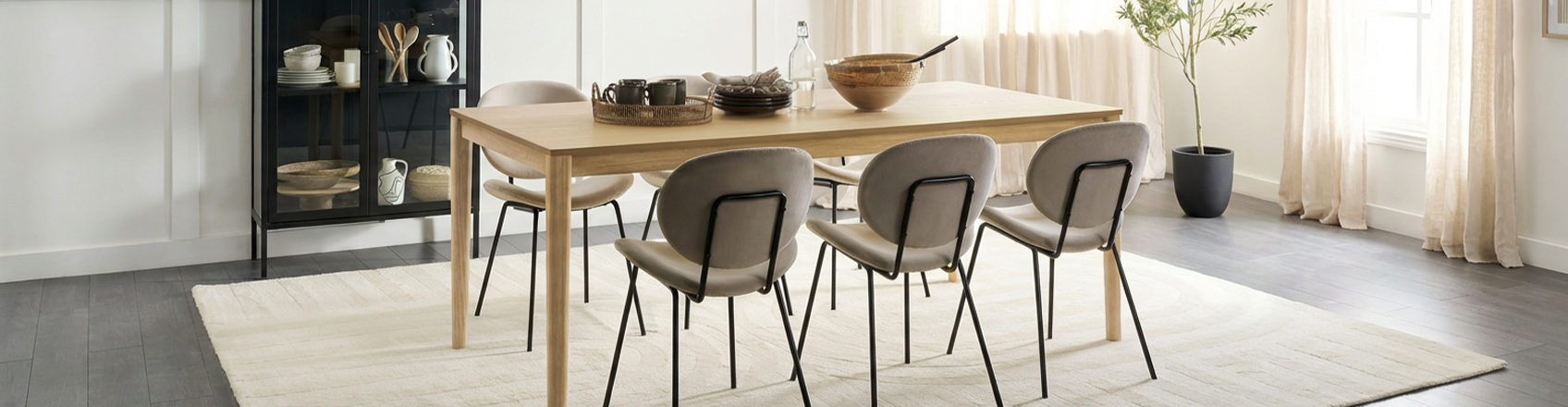
A table is often the piece a room is built around, whether it anchors daily meals or simply holds a lamp and a cup of coffee within reach. The right choice depends on how the space will actually be used, how many people need to fit around it, and how much floor space it can take up without crowding the room. This guide works through sizing, shape and the different table types, so the decision is straightforward rather than a guess.
In short
How do I choose the right size table?
Allow at least 60cm of table width per person seated, and leave 90-120cm of clearance around the table's edge so chairs can be pulled out and people can walk past comfortably. Measure the room's length and width first, then size the table to leave that clearance on every side it borders a walkway.
- A narrow room favours a rectangular table over a round one of the same seating capacity
- A room doubling as a walkway needs the full 90-120cm clearance, not just 60cm
- A table used mainly for two people can go smaller than the per-seat minimum suggests
Which table shape suits your room?
Shape affects both how many people fit and how the table feels in the room, independent of its overall footprint.
Oval and round tables
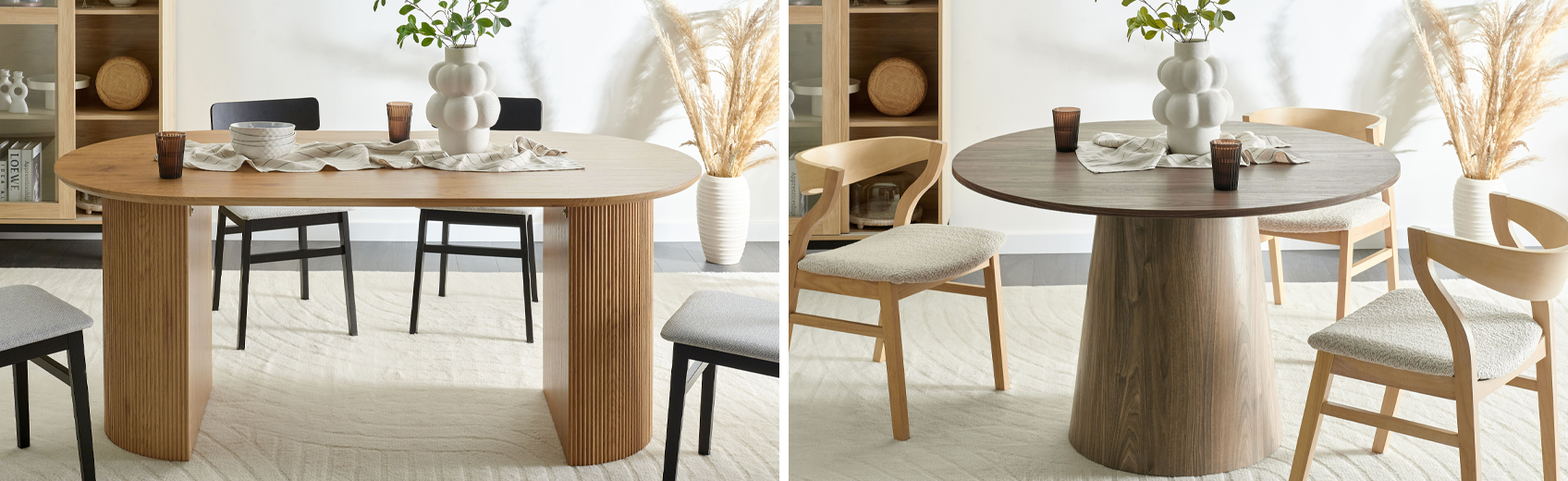
Round and oval tables remove sharp corners, which matters in a smaller room or a household with young children navigating around it. Because there are no corners to work around, seating can be arranged more flexibly, and every seat sits an equal distance from the centre, which suits conversation-led meals. They scale well from a compact two-seat round table to a longer oval for six or more.
Square and rectangular tables
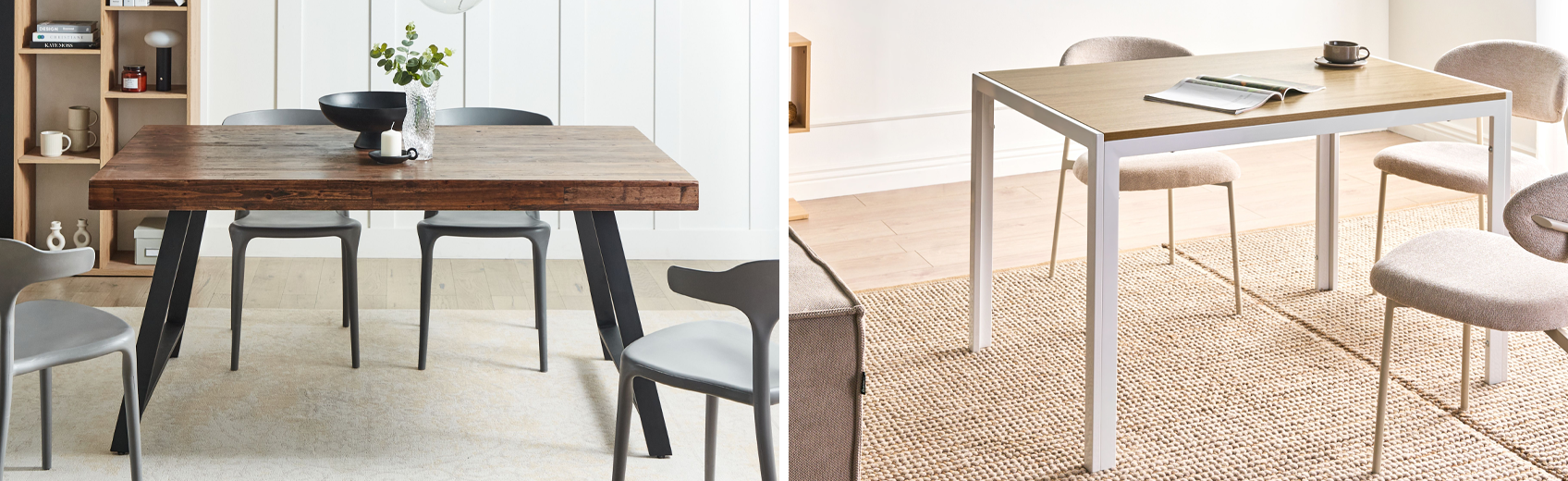
A square table suits a smaller, more intimate setting and fits neatly into a square room. A rectangular table seats more people along its length, which makes it the better fit for a narrow dining room or for a household that regularly hosts larger groups. Both shapes align easily against a wall, which a round table cannot do without wasting space.
What types of tables are there?
Table type follows function rather than room size alone: what the table needs to do day to day determines which category fits.
Dining tables and dining sets
Dining table tops come in glass, engineered wood and solid wood, each with different upkeep: glass shows fingerprints but wipes clean instantly, while solid wood needs occasional oiling but resists heat and daily wear well. An extendable top with a leaf or slide mechanism lets one table serve everyday meals and expand for guests, which suits a household without space to store a second table. Dining sets pair the table with matching chairs, benches or stools in the same material, which removes the need to match pieces separately.
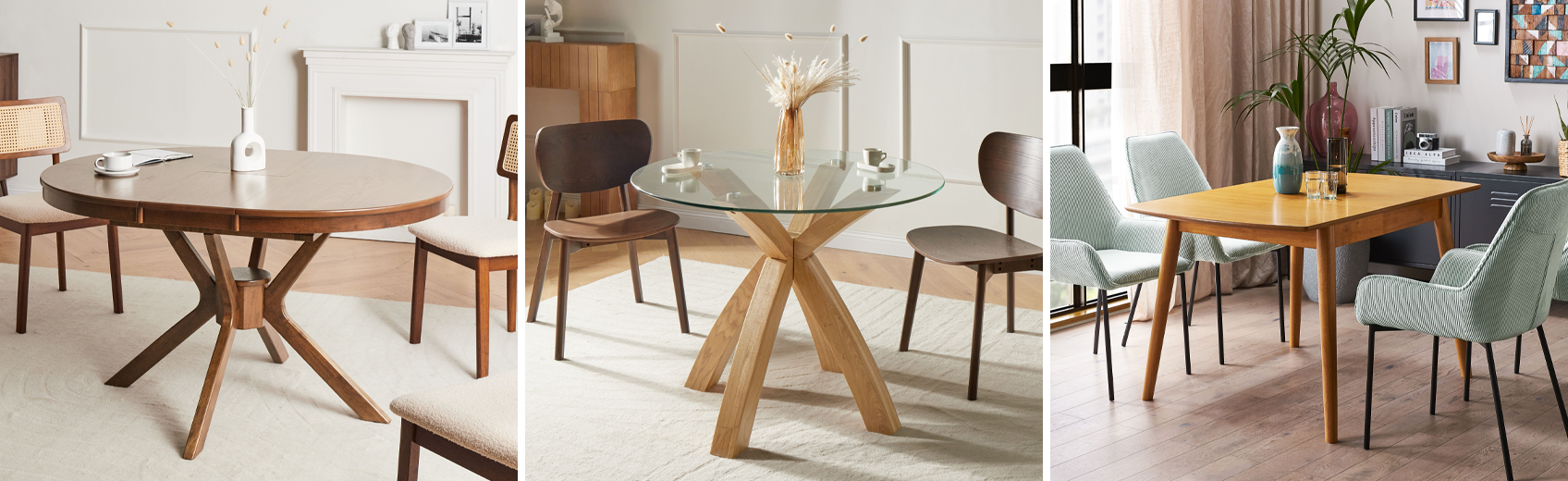
Shop now: dining tables and dining sets
Coffee and side tables
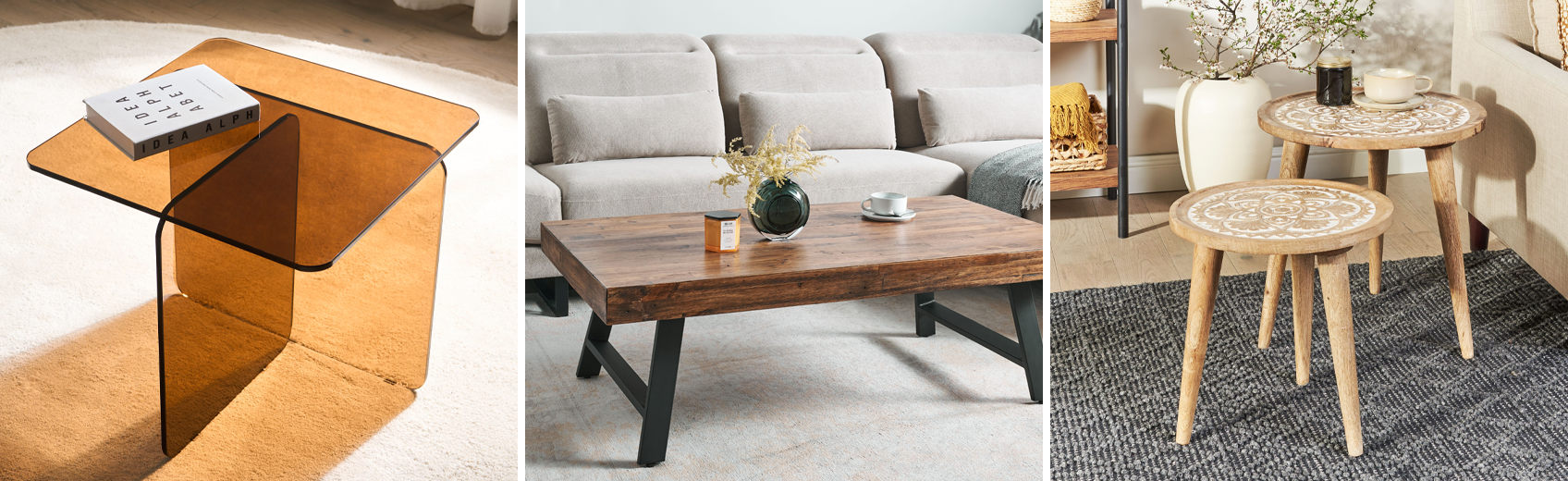
A coffee table works best when its top sits at or just below sofa-seat height, typically 40-45cm, so drinks and books stay within easy reach without dominating the seating area. A side table sits closer to armchair-arm height, usually 50-60cm, and suits a smaller footprint next to a single seat. Both are available in enough shapes and materials to double as a decorative feature rather than a purely functional one.
Shop now: coffee tables and side tables
Nest of tables
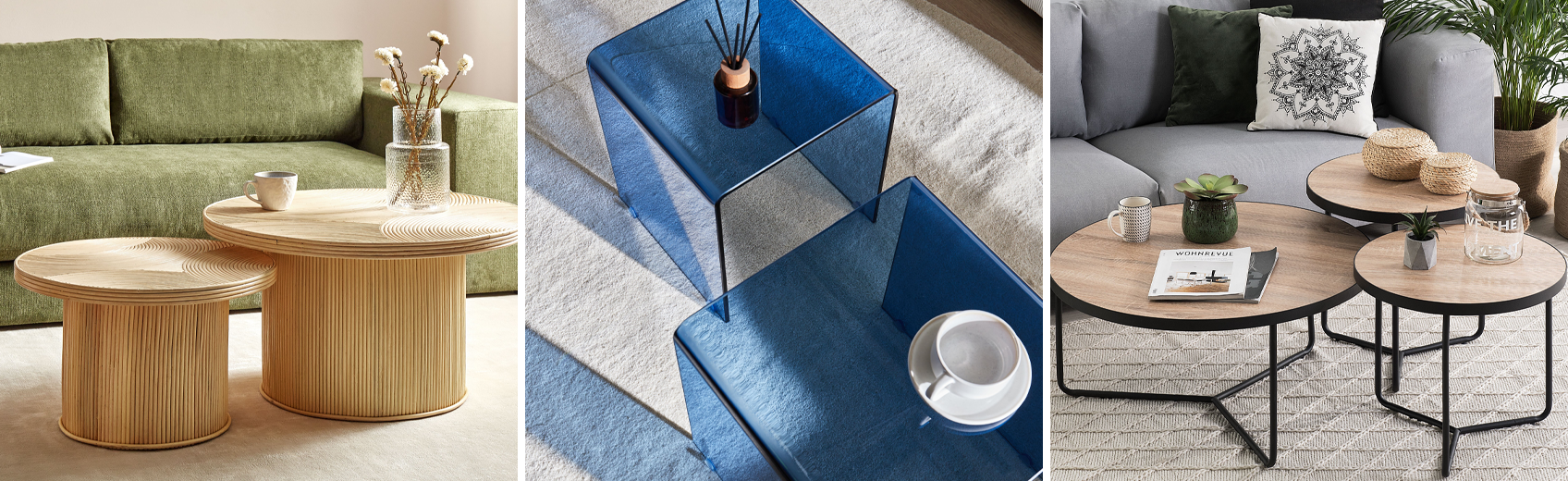
A nest of tables stacks two or three graduated sizes under one another, so the full set occupies the footprint of the largest table alone until a tier is pulled out for extra surface space. This makes them well suited to a small living room where a single fixed coffee table would take up more permanent floor space than needed day to day.
Shop now: nest of tables
Console tables
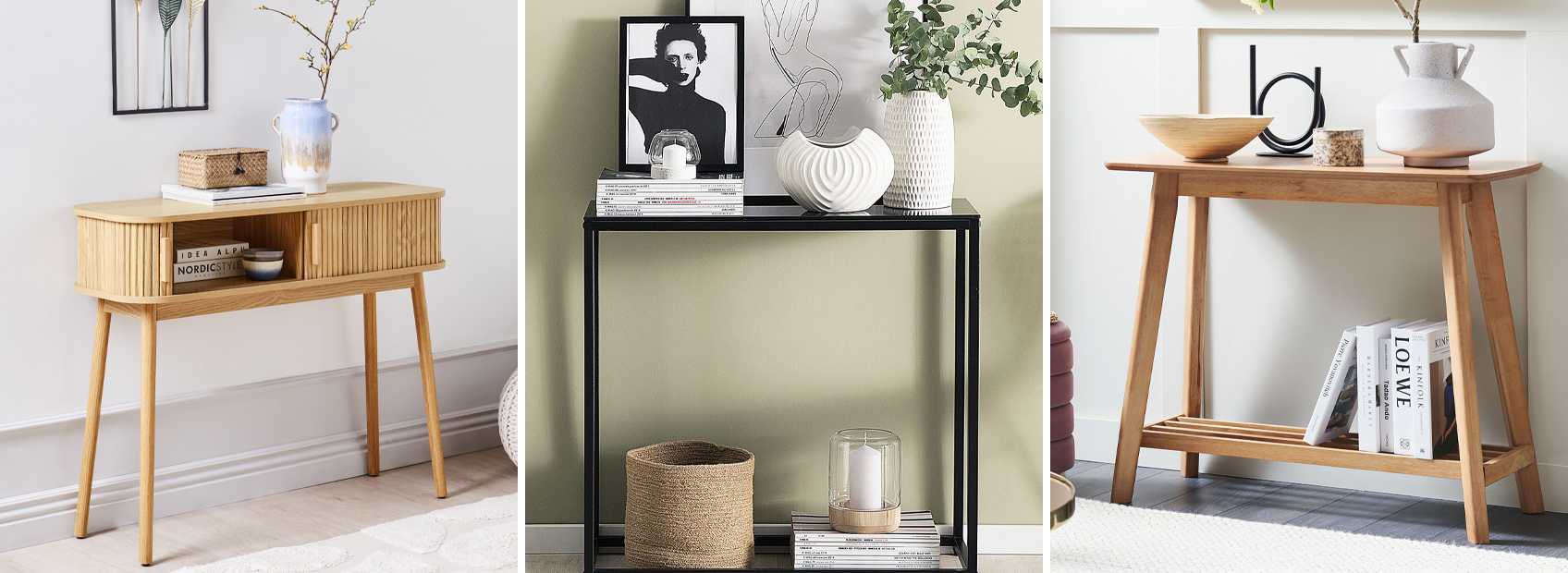
A console table is narrow enough, typically 30-45cm deep, to fit against a hallway wall or behind a sofa without blocking passage. Many include a shelf or drawer, which adds storage without extending the footprint. A deeper model within that range, paired with a chair, can also stand in as a compact desk.
Shop now: console tables
What to check before buying
Once the room, shape and type are settled, run through these checks before ordering.
- Table length or diameter against the room's actual measured space, not an estimate
- 90-120cm of clearance on every side that borders a walkway or door swing
- Seating capacity against 60cm of width per person, not just the number of chairs pictured
- Top material against maintenance you're willing to do, such as oiling wood or wiping glass daily
- Whether an extendable top is worth it for occasional larger gatherings
- Table height against the chairs, sofa or armchair it will be paired with
Frequently asked questions
Can an extendable table replace two separate tables?
Yes, an extendable dining table with a leaf or slide mechanism can grow from a compact everyday size to a full seating table for guests, which suits homes with limited storage space.
How high should a coffee table be compared to the sofa?
A coffee table works best when its top sits at or slightly below the height of the sofa seat cushion, typically around 40-45cm. This keeps items within easy reach without the table dominating the seating area.
Do nesting tables need to match in style?
No, nesting tables are sold as sets designed to sit together, but each tier can be pulled out and used separately around a room without looking mismatched.
Can a console table double as a desk?
Yes, a console table between 35-45cm deep works well as a compact desk, provided it has enough legroom underneath and sits at standard desk height of around 72-75cm.